 Late Romantic
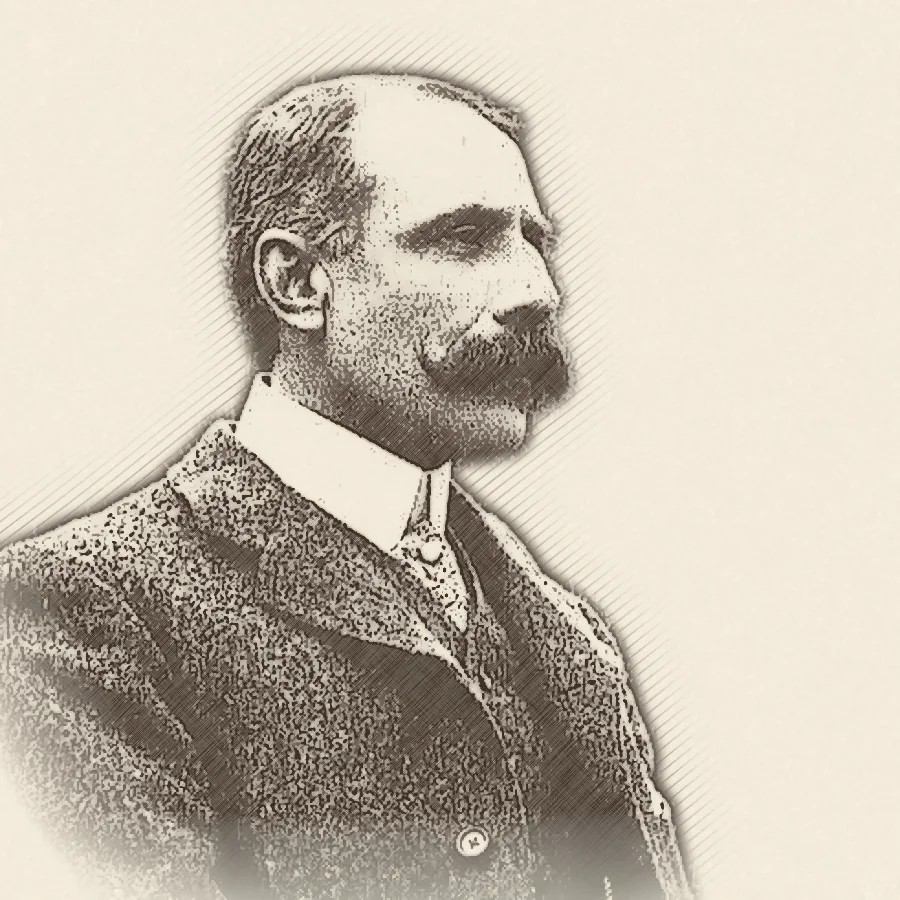
Edward Elgar
An English composer combining orchestral grandeur and intimate lyricism.
A life and its times
The milestones of the life and work, the contemporaries and the major world events, on a single line of time.
A life at a glance
- 1857Birth
Born on 2 June, son of a piano tuner and music dealer
- 1865Meanwhile
End of the American Civil War; slavery abolished in the USA
- 1872Trainingage 15
Leaves school; teaches himself music almost unaided
- 1874Meanwhile
First exhibition of the Impressionist painters
- 1875Meanwhile
The Palais Garnier opera house opens in Paris
- 1879Careerage 22
Conductor of the Powick asylum band
- 1888Workage 31
Salut d’amour, an engagement gift
- 1889Private lifeage 32
Marries Caroline Alice Roberts, his pupil
- 1889Meanwhile
The Eiffel Tower opens for the World’s Fair
- 1899Workage 42
Enigma Variations: fame at 42
- 1900Workage 43
The Dream of Gerontius, oratorio
- 1901Workage 44
Pomp and Circumstance March No. 1
- 1904Careerage 47
Knighted by King Edward VII
- 1905Meanwhile
Einstein publishes special relativity
- 1908Workage 51
Symphony No. 1: 100 performances in a year
- 1914Landmarkage 57
First World War
- 1914Meanwhile
The First World War begins
- 1918Meanwhile
End of the First World War
- 1919Workage 62
Cello Concerto
- 1924Careerage 67
Master of the King’s Music
- 1927Meanwhile
First talking picture (The Jazz Singer)
- 1932Landmarkage 75
Records his Violin Concerto with 16-year-old Yehudi Menuhin
- 1934Deathage 77
Dies in Worcester on 23 February
Listen
Excerpts from freely licensed recordings, with their performers and licences.
Excerpts last up to 90 seconds. Edward Elgar’s compositions are in the public domain; each recording is streamed from Wikimedia Commons under the licence shown, credited to its performers or uploader.
Listen to complete works on Wikimedia Commons
Wikimedia Commons is a free media library: you will find the complete recordings there, with their reuse conditions.
- Complete recordingPomp and Circumstance — March No. 1
- Complete recordingEnigma Variations — Nimrod
- Complete recordingSalut d’amour
- Wikimedia Commons filePomp and Circumstance
- Search for the workEnigma Variations
- Search for the workPomp and Circumstance No. 1
- Search for the workCello Concerto
- Search for the workSalut d’amour
- Search for the workThe Dream of Gerontius
- Search for the workViolin Concerto
- Everything on CommonsAll recordings of Edward Elgar
The life of Edward Elgar
Edward Elgar was born on 2 June 1857 at Lower Broadheath, a village near Worcester in the west of England. His father, William, a piano tuner and organist, ran a music shop in Worcester. Edward grew up surrounded by instruments and scores. He learned violin, piano, organ and bassoon, often on his own, studying the treatises and scores in the shop. A Catholic in a largely Anglican England, he long felt an outsider to polite society.
At fifteen he left school and worked briefly for a solicitor, then devoted himself to music. He could not afford to study at a conservatory and taught himself almost everything. He earned his living as a violinist, teacher and organist. From 1879 to 1884 he conducted the staff orchestra at the Powick lunatic asylum, composing quadrilles and polkas for it. He also played bassoon in a wind quintet with friends and composed for them.
In 1886 he took as a piano pupil Caroline Alice Roberts, a general’s daughter eight years his senior. They fell in love, and for their engagement in 1888 Elgar gave her Salut d’amour, a little piece that became very popular. Alice’s family disapproved of her marrying a penniless Catholic musician, but they married in 1889. Alice, a poet, believed deeply in his genius and supported him unfailingly; he later said he owed her everything.
For ten years Elgar composed cantatas for regional festivals but remained little known. Everything changed in 1899 with the Enigma Variations. One evening he improvised a theme at the piano and amused himself by varying it to imitate his friends’ personalities. Each variation is a musical portrait of someone close: his wife, his publisher August Jaeger in the famous “Nimrod”, or his friend George Sinclair, whose bulldog Dan falls into the river. The work made Elgar, at forty-two, the most famous composer in England. The mystery of the hidden theme, the “enigma”, has never been solved.
In 1900 he composed the oratorio The Dream of Gerontius, after a poem by Cardinal Newman; at first poorly performed, it then triumphed in Germany, where Richard Strauss hailed him as the first English progressive. In 1901 his march Pomp and Circumstance No. 1 was an extraordinary success; its trio, later sung to the words Land of Hope and Glory, became a kind of second British national anthem. In 1904 he was knighted by King Edward VII and became Sir Edward Elgar.
His Symphony No. 1, premiered in 1908, was performed more than a hundred times in a year around the world. The Violin Concerto (1910), premiered by Fritz Kreisler, and the Symphony No. 2 (1911) followed. The First World War filled him with sadness. In 1919 he composed his Cello Concerto, an elegiac and profound work. In 1920 the death of his wife Alice broke him; he composed almost no major works afterwards. In 1924 he was appointed Master of the King’s Music.
Elgar was very interested in new technologies such as chemistry, cinema and above all recording: he was one of the first composers to record his own works extensively. In 1932 he recorded his Violin Concerto with the sixteen-year-old prodigy Yehudi Menuhin. He died in Worcester on 23 February 1934, leaving unfinished a Third Symphony, completed in 1997 by the composer Anthony Payne. His portrait appeared on the twenty-pound sterling note.
Works to know
- 1888
Salut d’amour
Tender little piece for his fiancée.
Listen on Wikimedia Commons - 1899
Enigma Variations
14 musical portraits of his friends, including Nimrod.
Listen on Wikimedia Commons - 1900
The Dream of Gerontius
A soul’s journey after death.
Listen on Wikimedia Commons - 1901
Pomp and Circumstance No. 1
With ‘Land of Hope and Glory’, sung at every Last Night of the Proms.
Listen on Wikimedia Commons - 1910
Violin Concerto
Premiered by Fritz Kreisler.
Listen on Wikimedia Commons - 1919
Cello Concerto
Melancholy post-war work.
Listen on Wikimedia Commons
Anecdotes
One of the Enigma Variations depicts the bulldog Dan falling into the River Wye.
His portrait appeared on the £20 note.
He learned music almost on his own, studying the scores in his father’s shop.
The hidden theme of the Enigma Variations has never been identified with certainty.
Same era · Late Romantic
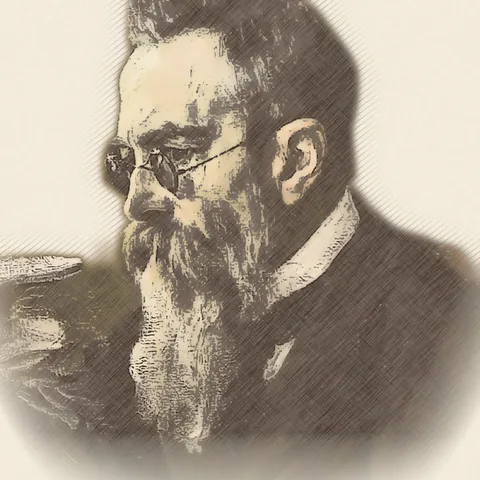 1844 – 1908Late Romantic
Nikolaï Rimski-Korsakov
A brilliant orchestrator whose sound palette influenced generations.
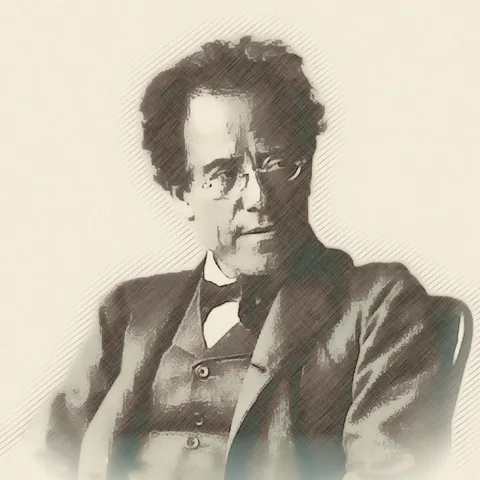 1860 – 1911Late Romantic
Gustav Mahler
His vast symphonies confront nature, irony, love and existential questions.
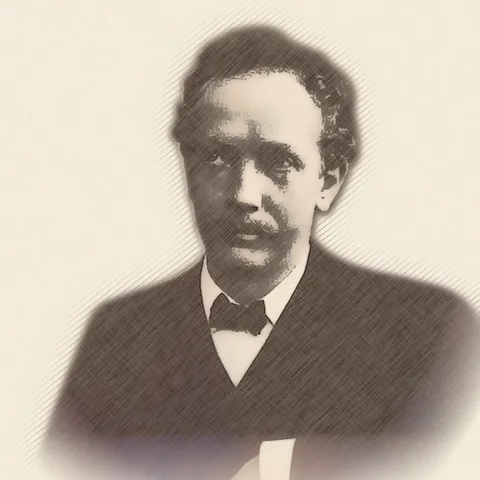 1864 – 1949Late Romantic
Richard Strauss
He pushed Romantic orchestration toward extraordinary richness and contrast.
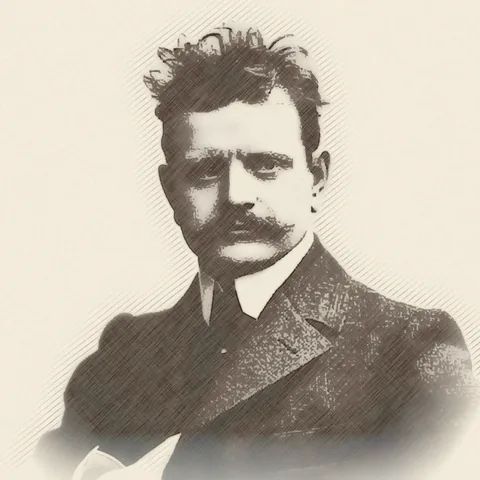 1865 – 1957Late Romantic
Jean Sibelius
He composed organic forms inspired by Finnish landscapes and culture.
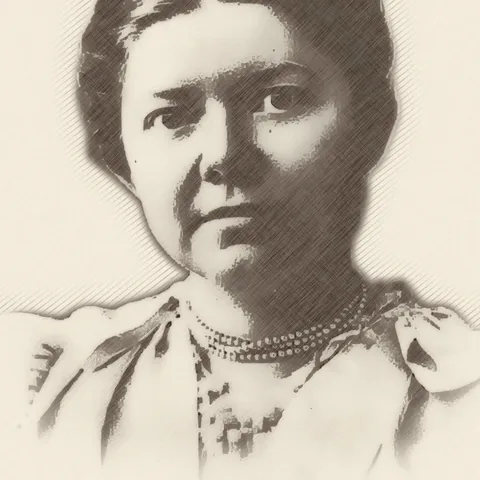 1867 – 1944Late Romantic
Amy Beach
An American pianist and composer who excelled in symphonic and chamber music.
 1872 – 1958Late Romantic
Ralph Vaughan Williams
An English composer inspired by folk songs and choral tradition.