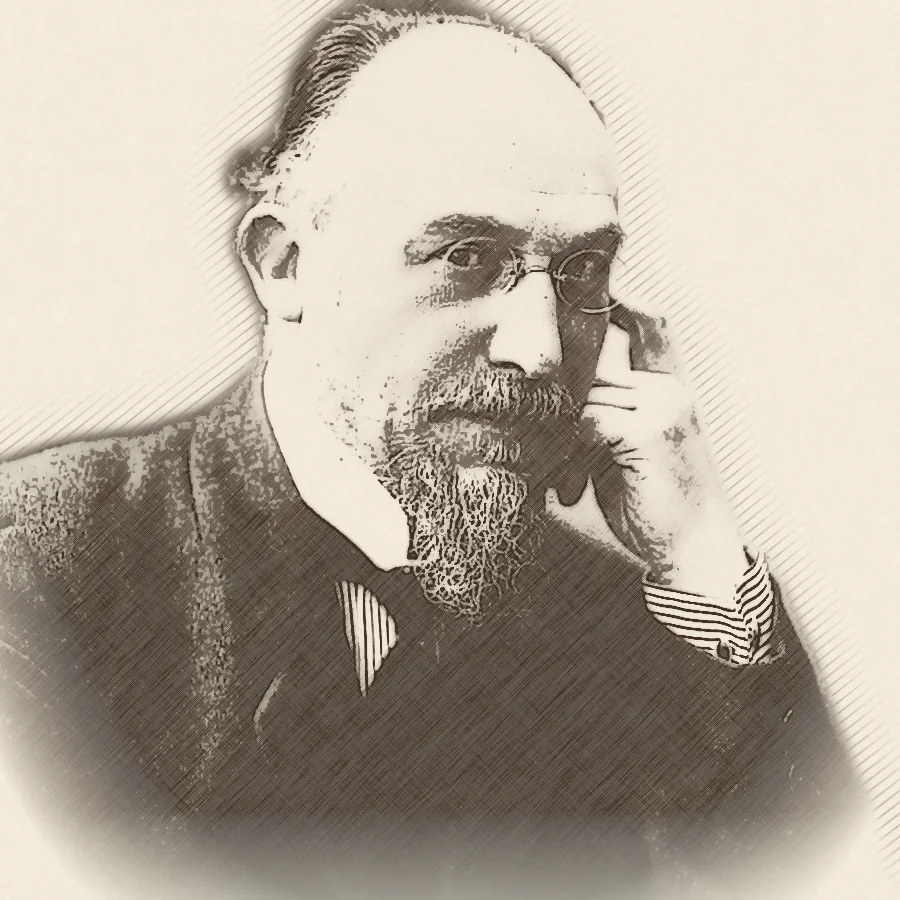
 Impressionism and modernity
Erik Satie
With spare pieces and wit, he challenged Romantic grandiosity.
A life and its times
The milestones of the life and work, the contemporaries and the major world events, on a single line of time.
A life at a glance
- 1866Birth
Born in Honfleur on 17 May
- 1869Meanwhile
The Suez Canal opens
- 1872Private lifeage 6
Death of his mother; raised partly by his grandparents
- 1875Meanwhile
The Palais Garnier opera house opens in Paris
- 1877Meanwhile
Edison invents the phonograph: sound can be recorded!
- 1879Trainingage 13
Enters the Conservatoire, where he is judged lazy
- 1887Milestoneage 21
Moves to Montmartre; pianist at the Chat Noir cabaret
- 1888Workage 22
Three Gymnopédies
- 1890Workage 24
Gnossiennes, without bar lines
- 1895Meanwhile
The Lumière brothers’ first cinema show
- 1898Milestoneage 32
Moves alone to Arcueil, where no one will ever enter his home
- 1903Meanwhile
First powered aeroplane flight (Wright brothers)
- 1905Trainingage 39
Goes back to school at 39, at the Schola Cantorum
- 1912Workage 46
Humorous pieces: Véritables Préludes flasques (pour un chien)
- 1912Meanwhile
The Titanic sinks
- 1917Workage 51
Parade, a ballet with Cocteau and Picasso: scandal
- 1917Meanwhile
Russian Revolution
- 1918Workage 52
Socrate; godfather of ‘Les Six’
- 1920Workage 54
Invents ‘furniture music’
- 1922Meanwhile
Public radio broadcasting begins (BBC, Radio Tour Eiffel)
- 1924Workage 58
Relâche, ballet with René Clair’s film Entr’acte
- 1925Deathage 59
Dies in Paris on 1 July
Listen
Excerpts from freely licensed recordings, with their performers and licences.
Excerpts last up to 90 seconds. Erik Satie’s compositions are in the public domain; each recording is streamed from Wikimedia Commons under the licence shown, credited to its performers or uploader.
Listen to complete works on Wikimedia Commons
Wikimedia Commons is a free media library: you will find the complete recordings there, with their reuse conditions.
- Complete recordingGymnopédie No. 1
- Complete recordingGnossienne No. 1
- Complete recordingGymnopédie No. 2 (guitar)
- Search for the workGymnopédies
- Search for the workGnossiennes
- Search for the workParade
- Search for the workVexations
- Search for the workJe te veux
- Search for the workSports et divertissements
- Everything on CommonsAll recordings of Erik Satie
The life of Erik Satie
Erik Satie was born at Honfleur in Normandy on 17 May 1866. His father, Alfred, was a shipping broker; his mother, Jane Leslie Anton, of Scottish origin, died in 1872. The boy was then entrusted to his grandparents in Honfleur, where the organist of the church of Saint-Léonard gave him his first music lessons and introduced him to Gregorian chant. In 1878, after his grandmother’s death, he joined his father in Paris, who had remarried a piano teacher.
In 1879 he entered the Paris Conservatoire, where he was profoundly bored. His teachers thought him lazy and untalented: one called him “the laziest student in the Conservatoire”. He was expelled, readmitted, then gave up. In 1886 he enlisted in the army but, to get himself discharged, deliberately exposed himself to the cold and caught bronchitis. He published his first piano pieces, including the Ogives, inspired by Gothic architecture.
In 1887 he left the family home and moved to Montmartre, the district of artists and cabarets. He became pianist at the famous Chat Noir cabaret, then at the Auberge du Clou, where he met Claude Debussy, who became his friend. It was then that he composed his most famous works: the three Gymnopédies (1888), slow, simple and melancholy, then the Gnossiennes (1890), written without bar lines and with strange instructions such as “on the tongue” or “so as to obtain a hollow”.
For a time Satie was passionate about esotericism and became the official composer of Sâr Péladan’s Rosicrucian order. He even founded his own “Metropolitan Art Church of Jesus the Conductor”, of which he was the only member. He composed Vexations (around 1893), a short piece with a note asking for it to be played 840 times in a row, which takes about eighteen hours. He had a brief and only love affair with the painter Suzanne Valadon, which left him very unhappy. In 1900 he also wrote cabaret songs such as the waltz Je te veux.
In 1898, penniless, he moved into a small room at Arcueil in the southern suburbs of Paris. Every day he walked across Paris to Montmartre and back at night. No one ever entered his room in his lifetime. In 1905, aged thirty-nine and aware of his gaps, he went back to school and studied counterpoint at the Schola Cantorum with Albert Roussel and Vincent d’Indy, graduating in 1908. He then composed many humorous pieces with absurd titles: Véritables Préludes flasques (pour un chien), Embryons desséchés and Sports et divertissements.
From 1911 Ravel and Debussy promoted his early works, and a new generation discovered him. In 1917, with Jean Cocteau, Pablo Picasso and Diaghilev’s Ballets Russes, he created the ballet Parade, whose music uses typewriters, sirens and pistol shots. The shocked audience hissed and shouted. Satie became the godfather of “Les Six” — Poulenc, Milhaud, Honegger, Auric, Durey and Tailleferre — who admired his simplicity and humour. In 1918 he composed Socrate, a symphonic drama of great sobriety.
In 1920 he invented “furniture music”, music meant to be heard but not listened to, like furniture — the ancestor of ambient music. In 1924 he composed the ballet Relâche, with a film by René Clair, Entr’acte. Ill, he died in Paris on 1 July 1925. In his room at Arcueil his friends found incredible clutter: two pianos stacked on top of each other, more than eighty umbrellas and a dozen identical velvet suits. Long regarded as an eccentric, he is now recognised as a forerunner of minimalist and ambient music.
Works to know
- 1888
Gymnopédies
Three slow, dreamy pieces, now world-famous.
Listen on Wikimedia Commons - 1890
Gnossiennes
Mysterious pieces with quirky directions.
Listen on Wikimedia Commons - 1893
Vexations
A short piece to be repeated… 840 times!
Listen on Wikimedia Commons - 1900
Je te veux
Café-concert sung waltz.
Listen on Wikimedia Commons - 1913
Sports et divertissements
21 illustrated miniatures about pastimes.
Listen on Wikimedia Commons - 1917
Parade
Ballet with typewriter, siren and pistol.
Listen on Wikimedia Commons
Anecdotes
After his death, more than 80 umbrellas and identical suits were found in his home.
His piece Vexations is to be played 840 times in a row — about 18 hours!
He founded his own church, of which he was the one and only member.
Every day he walked across Paris between Arcueil and Montmartre.
Same era · Impressionism and modernity
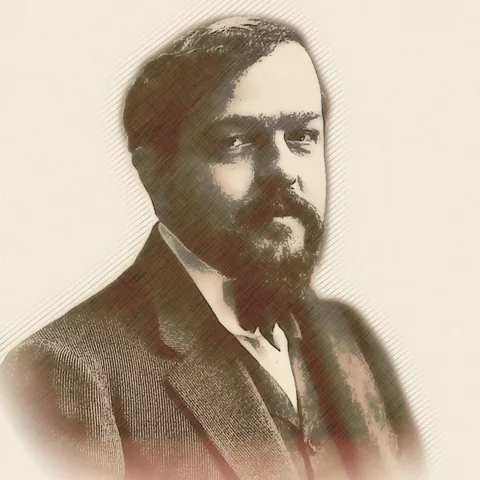 1862 – 1918Impressionism and modernity
Claude Debussy
He transformed harmony and orchestral color through suggestion rather than direct narrative.
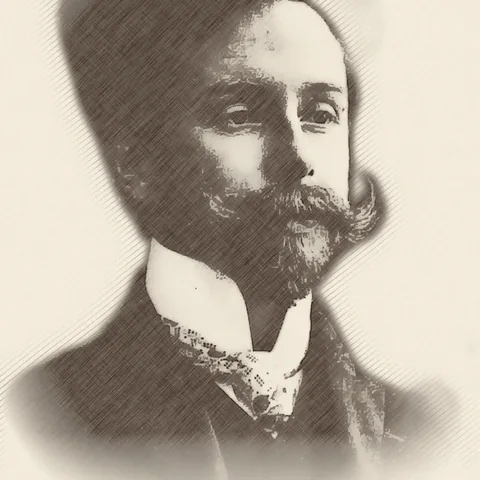 1872 – 1915Impressionism and modernity
Alexandre Scriabine
A pianist and mystic who explored chromatic harmony and multisensory projects.
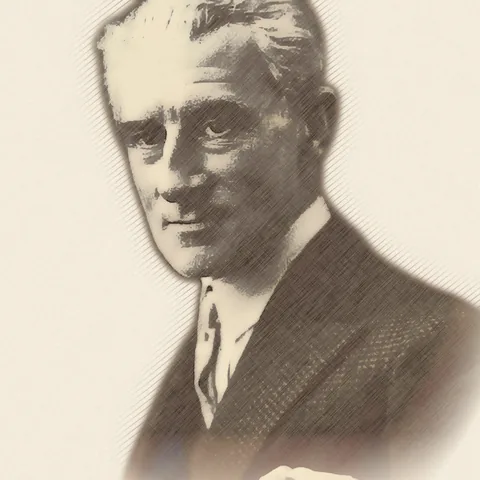 1875 – 1937Impressionism and modernity
Maurice Ravel
A meticulous orchestrator, he combined precision, dance and instrumental color.