 Romantic
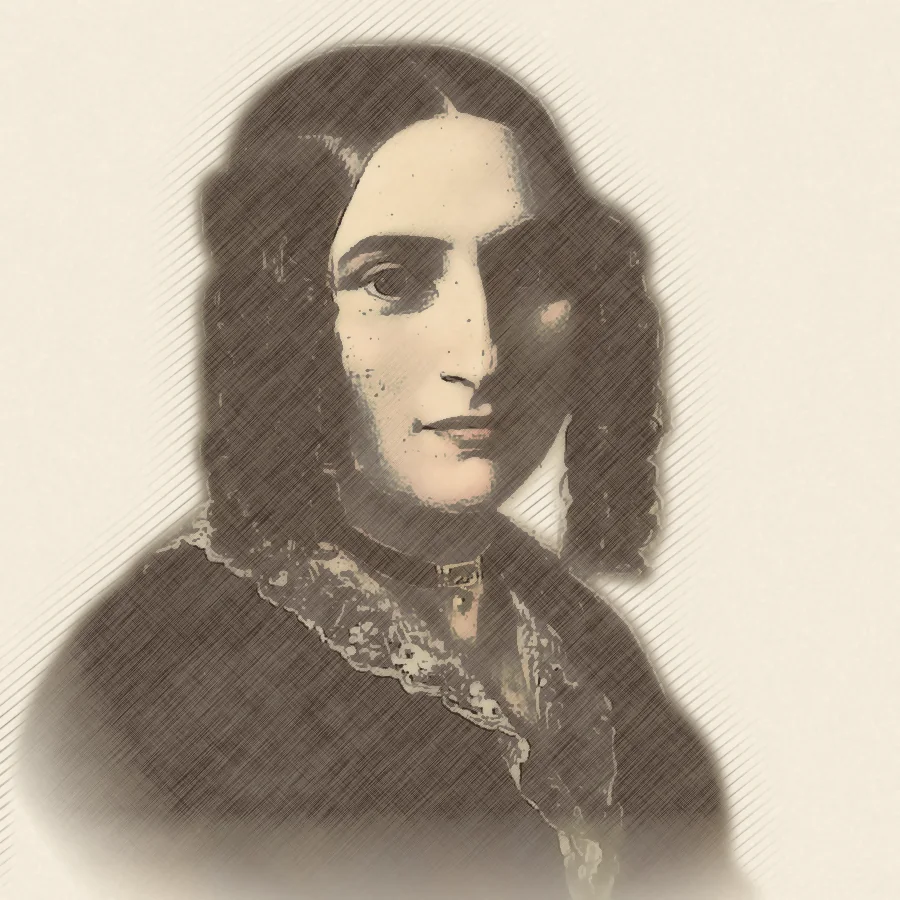
Fanny Mendelssohn
A composer and pianist who wrote hundreds of works despite social constraints.
A life and its times
The milestones of the life and work, the contemporaries and the major world events, on a single line of time.
A life at a glance
- 1805Birth
Born in Hamburg on 14 November, Felix’s elder sister
- 1811Milestoneage 6
The family settles in Berlin
- 1815Meanwhile
Battle of Waterloo
- 1816Meanwhile
Maelzel patents the metronome (1815–16)
- 1818Trainingage 13
Studies composition with Carl Friedrich Zelter
- 1820Private lifeage 15
Her father writes that music can only be an ‘ornament’ for her
- 1822Meanwhile
Champollion deciphers hieroglyphs
- 1825Meanwhile
First public passenger railway (England)
- 1827Workage 22
Three of her songs published under Felix’s name
- 1829Private lifeage 24
Marries the painter Wilhelm Hensel
- 1830Meanwhile
July Revolution in France
- 1831Careerage 26
Runs the famous Sunday concerts (Sonntagsmusiken) in Berlin
- 1839Journeyage 34
Trip to Italy: a happy stay in Rome
- 1839Meanwhile
Photography is invented (daguerreotype)
- 1840Meanwhile
Adolphe Sax invents the saxophone (c. 1840)
- 1841Workage 36
Das Jahr, a 12-piece piano cycle
- 1842Landmarkage 37
Queen Victoria sings her song ‘Italien’, believing it to be by Felix
- 1846Workage 41
At last publishes under her own name (Op. 1)
- 1847Deathage 42
Dies in Berlin on 14 May during a rehearsal
Listen
Excerpts from freely licensed recordings, with their performers and licences.
Fanny Mendelssohn’s music is in the public domain, but Wikimedia Commons does not yet offer a freely licensed recording of these works. The links below lead to scores and searches on Commons; as soon as a free recording is published, it can be added here.
Listen to complete works on Wikimedia Commons
Wikimedia Commons is a free media library: you will find the complete recordings there, with their reuse conditions.
The life of Fanny Mendelssohn
Fanny Mendelssohn was born in Hamburg on 14 November 1805, the eldest of the four children of Abraham Mendelssohn, a wealthy banker, and Lea Salomon. She was the granddaughter of the philosopher Moses Mendelssohn, a great figure of the Jewish Enlightenment. According to family legend, her mother remarked at her birth that she had “Bach fugue fingers”. In 1811, fleeing the French occupation, the family moved to Berlin. The children were baptised as Protestants in 1816.
Like her brother Felix, born in 1809, Fanny received an exceptional education: languages, literature, drawing and above all music. Her mother gave her first piano lessons. At thirteen she played from memory the twenty-four preludes of the first book of Bach’s Well-Tempered Clavier. She studied composition with Carl Friedrich Zelter, director of the Berlin Singakademie, who thought her as gifted as her brother. Felix and Fanny were inseparable and showed each other all their compositions.
But their roles were different. In 1820 her father wrote to her that music might become Felix’s profession, “while for you it can and must only be an ornament”. A woman from a good family was not to have a public career. Felix himself, despite his admiration, discouraged her from publishing. In 1827 three of her songs were published under Felix’s name in his Op. 8 and Op. 9 collections.
In 1829 she married the painter Wilhelm Hensel, court painter to Prussia, who fully supported her creative work. Every morning he placed a blank sheet of manuscript paper on her music stand to encourage her to compose. They had a son, Sebastian. From 1831 Fanny organised in the family home on the Leipziger Strasse the “Sonntagsmusiken”, Sunday concerts at which she conducted a choir and orchestra, played the piano and presented her own works and those of other composers to Berlin society.
In 1842, during Felix’s visit to England, Queen Victoria sang to him her favourite of his songs, “Italien”, believing it to be his. Felix had to admit that it had been composed by his sister. In 1839–40 Fanny made a long journey to Italy with her husband and son, one of the happiest periods of her life. In Rome, at the Villa Medici, she met the young Charles Gounod, who admired her.
The journey inspired Das Jahr (The Year, 1841), a cycle of twelve piano pieces, one for each month of the year, each accompanied by a poem and a vignette drawn by her husband. It is one of her most ambitious works. She also composed a String Quartet in E flat (1834), an Overture for orchestra, cantatas and above all more than 250 songs and many piano pieces. In all, her output numbers more than 460 compositions.
In 1846, encouraged by publishers and those around her, she finally decided to publish under her own name without waiting for her brother’s approval. Her Lieder Op. 1 and other collections appeared. Felix eventually sent his blessing. But on 14 May 1847, during a rehearsal of a work by Felix for a Sunday concert, she suffered a stroke and died that evening, aged forty-one. Felix, devastated, composed his String Quartet in F minor in her memory and died six months later.
Works to know
- 1828
Easter Sonata
Long attributed to Felix, restored to Fanny in 2010.
Listen on Wikimedia Commons - 1834
String Quartet in E-flat
Bold chamber music.
Listen on Wikimedia Commons - 1841
Das Jahr (The Year)
Twelve piano pictures, one per month, plus a postlude.
Listen on Wikimedia Commons - 1846
Piano Trio Op. 11
Passionate late work.
Listen on Wikimedia Commons - 1846
Gartenlieder Op. 3
Choral songs on garden themes.
Listen on Wikimedia Commons - 1846
Songs Op. 1
Her first collection under her own name.
Listen on Wikimedia Commons
Anecdotes
Queen Victoria sang her favourite ‘Felix’ song… which was actually by Fanny!
She composed more than 450 works.
Every morning her husband placed a blank sheet of music paper on her stand to encourage her to compose.
Her cycle Das Jahr has twelve pieces, one per month, each illustrated by her painter husband.
Same era · Romantic
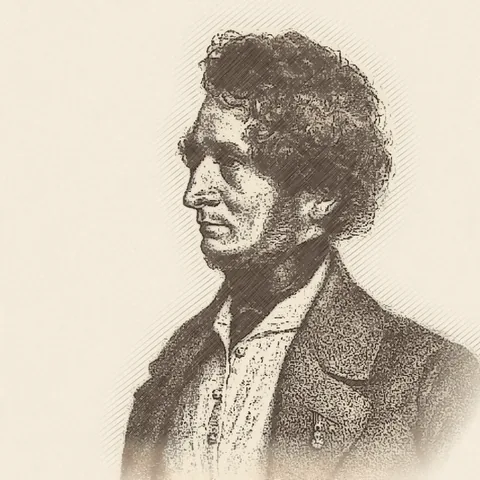 1803 – 1869Romantic
Hector Berlioz
He imagined spectacular orchestras and told stories through instrumental colors.
 1804 – 1875Romantic
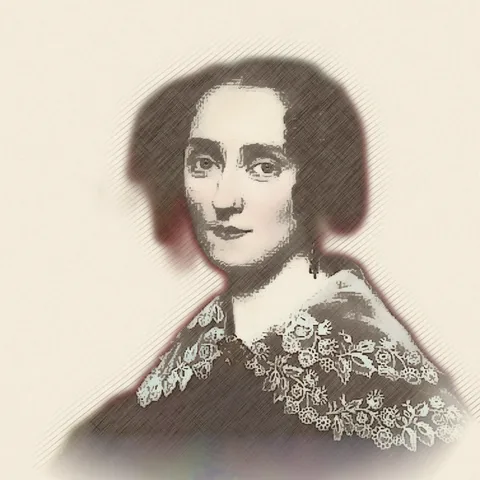
Louise Farrenc
A pianist, composer and Paris Conservatoire professor, she championed instrumental music.
 1809 – 1847Romantic
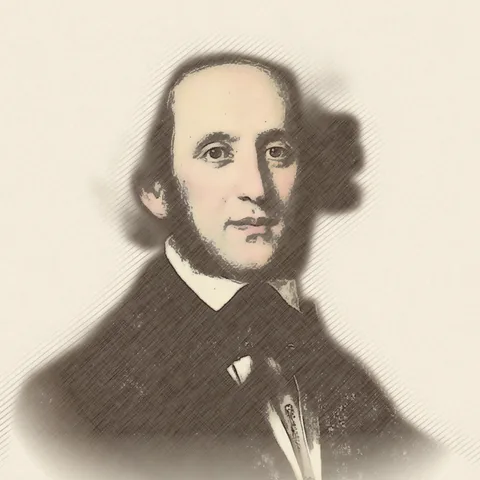
Felix Mendelssohn
A conductor and composer who revived Bach and wrote music of great clarity.
 1810 – 1849Romantic
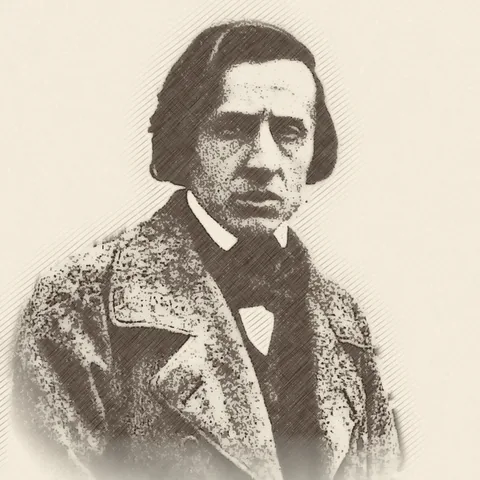
Frédéric Chopin
At the piano, he combined virtuosity, poetry and memories of Polish dance.
 1810 – 1856Romantic
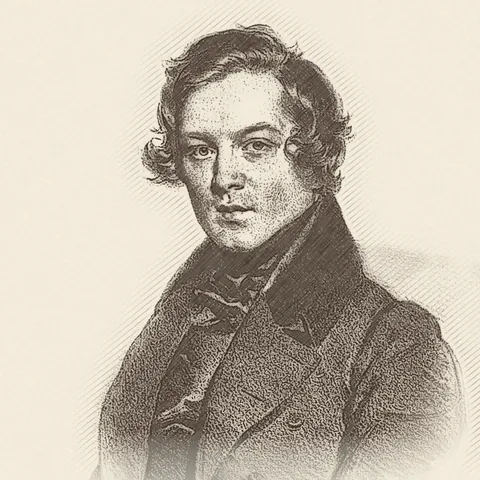
Robert Schumann
A composer and critic, he explored psychological contrasts in piano music.
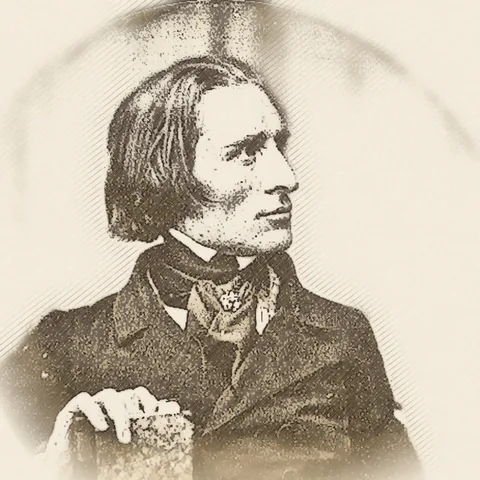 1811 – 1886Romantic
Franz Liszt
A star pianist, he invented new forms and developed the symphonic poem.