 Romantic
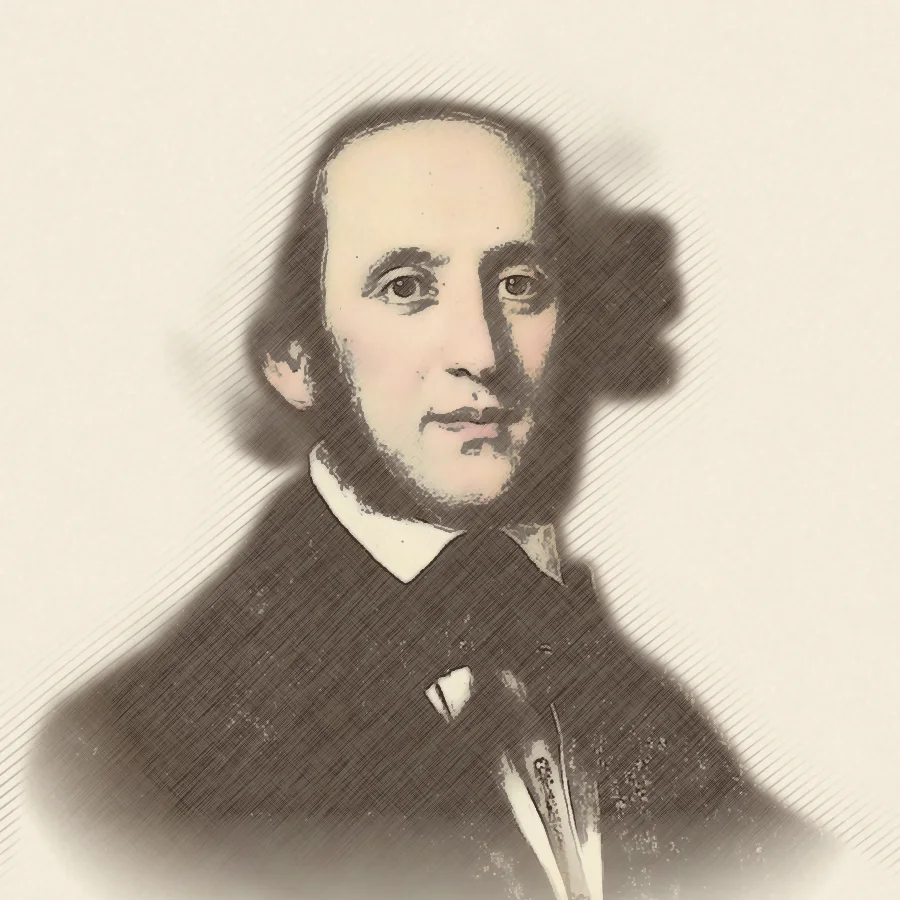
Felix Mendelssohn
A conductor and composer who revived Bach and wrote music of great clarity.
A life and its times
The milestones of the life and work, the contemporaries and the major world events, on a single line of time.
A life at a glance
- 1809Birth
Born in Hamburg on 3 February, grandson of the philosopher Moses Mendelssohn
- 1815Meanwhile
Battle of Waterloo
- 1816Meanwhile
Maelzel patents the metronome (1815–16)
- 1821Journeyage 12
Meets Goethe in Weimar, aged 12
- 1822Meanwhile
Champollion deciphers hieroglyphs
- 1825Workage 16
String Octet, at 16
- 1825Meanwhile
First public passenger railway (England)
- 1826Workage 17
A Midsummer Night’s Dream overture, at 17
- 1829Workage 20
Revives Bach’s St Matthew Passion, forgotten for a century
- 1829Journeyage 20
Trip to Scotland: Fingal’s Cave inspires him (The Hebrides)
- 1830Journeyage 21
Travels in Italy
- 1830Meanwhile
July Revolution in France
- 1835Careerage 26
Conductor of the Leipzig Gewandhaus Orchestra
- 1837Private lifeage 28
Marries Cécile Jeanrenaud
- 1839Meanwhile
Photography is invented (daguerreotype)
- 1840Meanwhile
Adolphe Sax invents the saxophone (c. 1840)
- 1842Workage 33
Incidental music for the Dream, with the Wedding March
- 1843Careerage 34
Founds the Leipzig Conservatory
- 1845Workage 36
Premiere of the Violin Concerto in E minor
- 1846Workage 37
Elijah, oratorio, premiered in Birmingham
- 1847Deathage 38
Dies in Leipzig on 4 November, six months after his sister Fanny
Listen
Excerpts from freely licensed recordings, with their performers and licences.
Excerpts last up to 90 seconds. Felix Mendelssohn’s compositions are in the public domain; each recording is streamed from Wikimedia Commons under the licence shown, credited to its performers or uploader.
Listen to complete works on Wikimedia Commons
Wikimedia Commons is a free media library: you will find the complete recordings there, with their reuse conditions.
- Complete recordingA Midsummer Night’s Dream — Wedding March
- Complete recording“Italian” Symphony — Saltarello
- Complete recordingPiano Concerto No. 1 — Andante
- Search for the workViolin Concerto in E minor
- Search for the workA Midsummer Night’s Dream
- Search for the workSymphony No. 4 ‘Italian’
- Search for the workThe Hebrides (Fingal’s Cave)
- Search for the workString Octet
- Search for the workSongs without Words
- Search for the workElijah
- Everything on CommonsAll recordings of Felix Mendelssohn
The life of Felix Mendelssohn
Felix Mendelssohn Bartholdy was born in Hamburg on 3 February 1809. Grandson of the philosopher Moses Mendelssohn and son of the banker Abraham Mendelssohn, he grew up in Berlin from 1811 in a wealthy, highly cultivated family. Like his elder sister Fanny, he received a complete education: ancient and modern languages, drawing, literature and above all music. He studied piano with Ludwig Berger and composition with Carl Friedrich Zelter, who introduced him to Bach.
A child prodigy, from the age of eleven he composed string symphonies, concertos and little operas, performed at the concerts held every Sunday in the family home. In 1821, aged twelve, Zelter took him to Weimar to meet the seventy-two-year-old Goethe, who was won over and received him several times. At sixteen, in 1825, he composed his String Octet, a masterpiece of astonishing maturity. The following year, after reading Shakespeare with Fanny, he wrote the Overture to A Midsummer Night’s Dream, evoking the magical world of the elves.
In 1829, aged twenty, he conducted at the Berlin Singakademie Johann Sebastian Bach’s St Matthew Passion, of which he had obtained a copy and which had not been performed since the composer’s death a century earlier. This concert launched the Bach revival. That same year he set off on a great journey: England, then Scotland, where a visit to Fingal’s Cave in the Hebrides inspired the overture The Hebrides, then Italy, Switzerland and France.
These travels also produced the “Scottish” Symphony and the sun-filled “Italian” Symphony (1833). He also composed Songs without Words for piano, short lyrical pieces published in eight books and much loved by amateur pianists. After a post as music director in Düsseldorf, he was appointed in 1835 conductor of the Leipzig Gewandhaus Orchestra, which he made one of the finest in Europe. He was one of the first conductors to use a baton.
In 1837 he married Cécile Jeanrenaud, daughter of a French pastor in Frankfurt, with whom he had five children. In Leipzig he performed works by composers past and present: he premiered Schubert’s “Great” C major Symphony, rediscovered by Schumann, and supported young musicians. In 1843 he founded the Leipzig Conservatory, which became one of the most renowned in the world, and had Schumann and the violinist Ferdinand David teach there.
England adored him: he made about ten visits, played for Queen Victoria and Prince Albert, and conducted his works before enthusiastic crowds. In 1842 he completed his incidental music for A Midsummer Night’s Dream, including the famous Wedding March. In 1845 Ferdinand David premiered his Violin Concerto in E minor, one of the best-loved in the repertoire. In 1846 his oratorio Elijah was premiered triumphantly at the Birmingham Festival.
Mendelssohn was overworked by his many activities. On 14 May 1847 he learned of the sudden death of his sister Fanny, to whom he was very close. Devastated, he composed in her memory the String Quartet in F minor, of painful violence. He died in Leipzig on 4 November 1847, aged thirty-eight, like Fanny of a stroke. Later, under the Nazi regime, his music was banned because of his Jewish origins and his statue in Leipzig destroyed. He is now recognised as one of the great masters of Romanticism.
Works to know
- 1825
String Octet
Masterpiece by a 16-year-old.
Listen on Wikimedia Commons - 1830
The Hebrides (Fingal’s Cave)
Overture that conjures Scottish waves.
Listen on Wikimedia Commons - 1830
Songs without Words
Singing piano pieces.
Listen on Wikimedia Commons - 1833
Symphony No. 4 ‘Italian’
Sunny memories of Italy.
Listen on Wikimedia Commons - 1842
A Midsummer Night’s Dream
Fairies, elves and the Wedding March played at countless weddings.
Listen on Wikimedia Commons - 1844
Violin Concerto in E minor
One of the best-loved violin concertos.
Listen on Wikimedia Commons - 1846
Elijah
Grand biblical oratorio.
Listen on Wikimedia Commons
Anecdotes
He was also an excellent watercolour painter.
His Wedding March is played at millions of weddings around the world.
At twelve he met Goethe, who received him several times at his home in Weimar.
He founded the Leipzig Conservatory in 1843.
Same era · Romantic
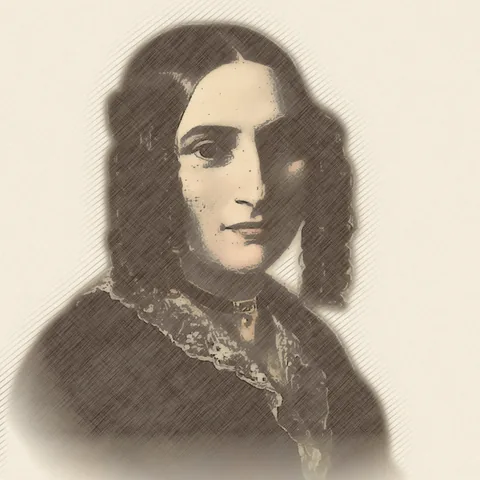 1805 – 1847Romantic
Fanny Mendelssohn
A composer and pianist who wrote hundreds of works despite social constraints.
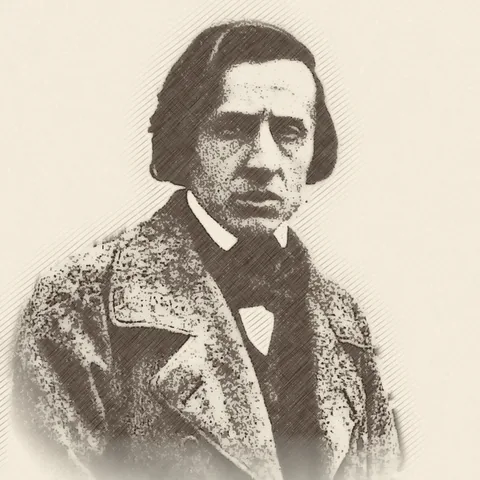 1810 – 1849Romantic
Frédéric Chopin
At the piano, he combined virtuosity, poetry and memories of Polish dance.
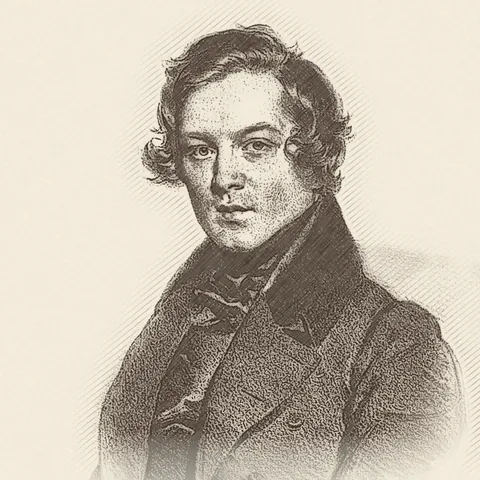 1810 – 1856Romantic
Robert Schumann
A composer and critic, he explored psychological contrasts in piano music.
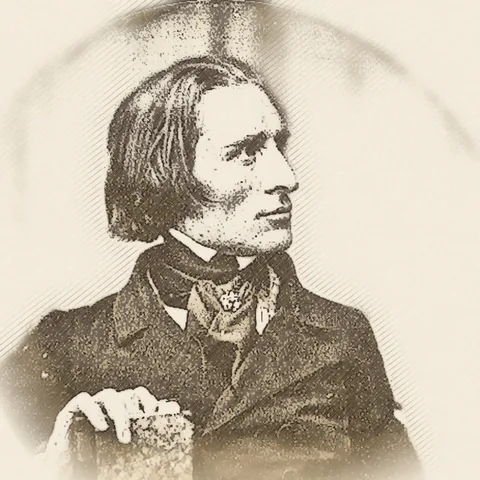 1811 – 1886Romantic
Franz Liszt
A star pianist, he invented new forms and developed the symphonic poem.
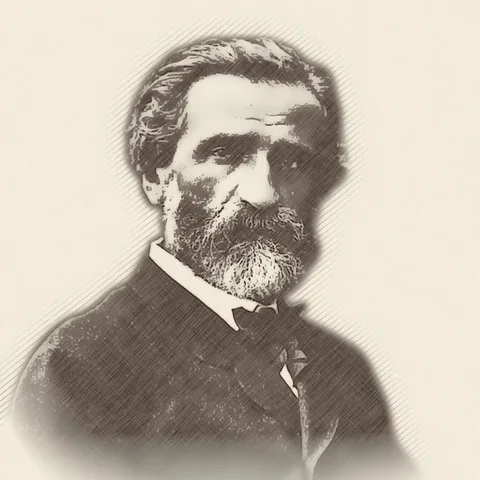 1813 – 1901Romantic
Giuseppe Verdi
His operas give unforgettable voice to human passions and conflicts.
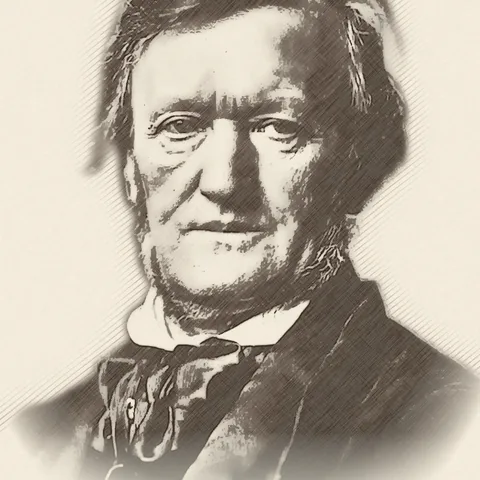 1813 – 1883Romantic
Richard Wagner
He envisioned music drama as a unity of orchestra, poetry and stagecraft.