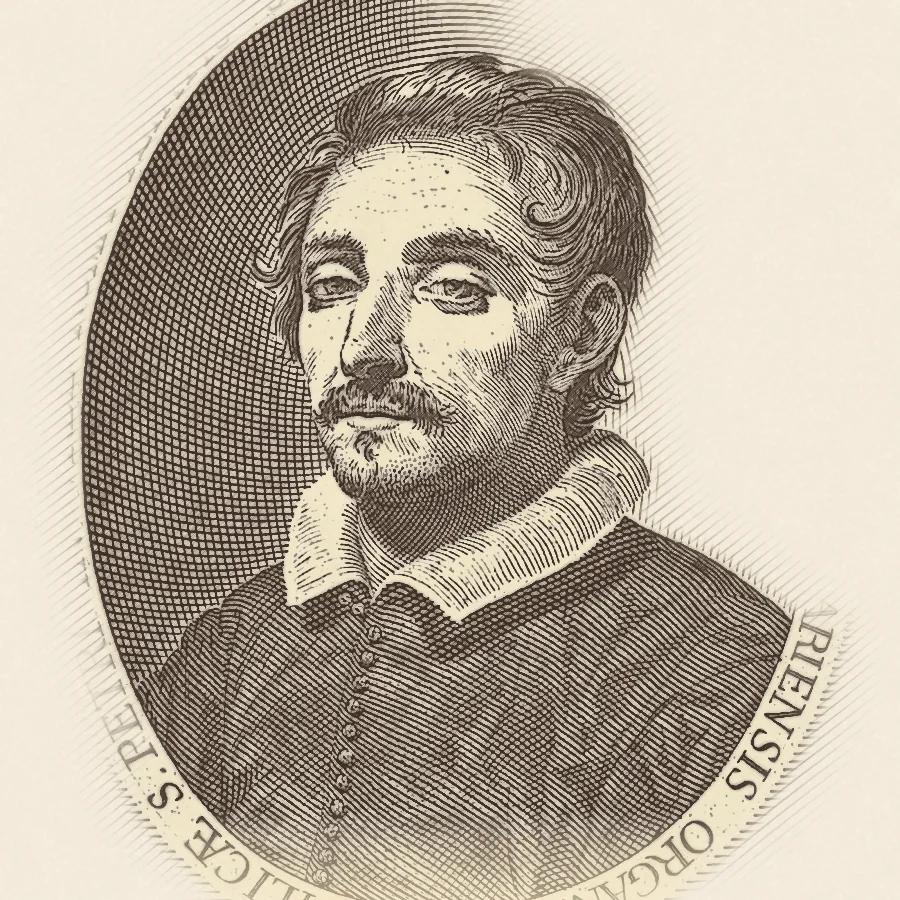
 Baroque
Girolamo Frescobaldi
A Roman organist who transformed keyboard writing and the art of variation.
A life and its times
The milestones of the life and work, the contemporaries and the major world events, on a single line of time.
A life at a glance
- 1583Birth
Born in Ferrara in September
- 1588Meanwhile
Defeat of the Spanish Armada
- 1597Trainingage 14
Pupil of Luzzasco Luzzaschi, organist at the Este court
- 1598Meanwhile
Edict of Nantes
- 1600Meanwhile
Shakespeare writes Hamlet (c. 1600)
- 1607Journeyage 24
Travels to Flanders with the papal nuncio Guido Bentivoglio
- 1608Careerage 25
Organist of St Peter’s Basilica, Rome
- 1608Workage 25
Publishes his first Fantasie in Milan
- 1609Meanwhile
Galileo observes the sky with his telescope
- 1613Private lifeage 30
Marries Orsola del Pino
- 1615Workage 32
First book of Toccate e partite
- 1618Landmarkage 35
The Thirty Years’ War begins
- 1618Meanwhile
The Thirty Years’ War begins
- 1620Meanwhile
The Mayflower reaches America
- 1628Careerage 45
Court organist to the Grand Duke of Tuscany in Florence
- 1634Milestoneage 51
Returns to Rome under Barberini patronage
- 1635Workage 52
Fiori musicali, organ music for the Mass
- 1637Meanwhile
The first public opera house opens in Venice
- 1643Deathage 60
Dies in Rome on 1 March
- 1643Meanwhile
Louis XIV becomes King of France aged four
Listen
Excerpts from freely licensed recordings, with their performers and licences.
Excerpts last up to 90 seconds. Girolamo Frescobaldi’s compositions are in the public domain; each recording is streamed from Wikimedia Commons under the licence shown, credited to its performers or uploader.
Listen to complete works on Wikimedia Commons
Wikimedia Commons is a free media library: you will find the complete recordings there, with their reuse conditions.
- Complete recordingToccata No. 3
- Complete recordingFiori musicali — Toccata before the Sunday Mass
- Search for the workFiori musicali
- Search for the workToccate e partite, Book 1
- Search for the workSecond Book of Toccatas
- Search for the workCento partite sopra passacagli
- Search for the workArie musicali
- Everything on CommonsAll recordings of Girolamo Frescobaldi
The life of Girolamo Frescobaldi
Girolamo Frescobaldi was born in Ferrara in September 1583 into a comfortable family. Ferrara was then one of the most refined courts in Italy, ruled by the music-loving Este family. Young Girolamo studied there with Luzzasco Luzzaschi, court organist and composer of daring madrigals, who owned a rare instrument, the “archicembalo”, able to play intervals smaller than a semitone. Frescobaldi soon made a name as a prodigy organist and harpsichordist.
In 1598 Ferrara was absorbed into the Papal States and the Este court moved to Modena: the city’s musical life declined. Frescobaldi left for Rome, where in 1604 he joined the Accademia di Santa Cecilia and became organist of Santa Maria in Trastevere. In 1607 he accompanied the nuncio Guido Bentivoglio to Flanders, to Brussels, where he discovered the northern keyboard school. He published a book of madrigals in Antwerp.
Back in Rome he was appointed in 1608 organist of St Peter’s Basilica, the most prestigious post in Christendom. According to one account, no fewer than thirty thousand people crowded in to hear his first concert — surely an exaggeration, but it shows his fame. He held the post until his death, with a break of a few years. In 1613 he married Orsola del Pino, with whom he had five children.
Frescobaldi was above all a keyboard composer, for organ and harpsichord. In 1615 he published his first book of Toccate e partite, whose preface became famous: he asks performers not to play in strict time but freely, as one sings a modern madrigal, slowing down or speeding up according to the expression. His toccatas, made of virtuoso passages, strange dissonances and sudden changes of mood, are like written-out improvisations, full of fantasy.
He also wrote ricercars, canzonas, capriccios and sets of variations on well-known basses, such as the Cento partite sopra passacagli, where he virtuosically links passacaglias and chaconnes. He also composed vocal music, notably two books of Arie musicali (1630), as well as masses and motets. Between 1628 and 1634 he left Rome to become organist at the court of Grand Duke Ferdinando II de’ Medici in Florence, before returning under the protection of the powerful Barberini family, that of Pope Urban VIII.
In 1635 he published the Fiori musicali (“Musical Flowers”), a collection of organ pieces for the Mass: toccatas for the Elevation, canzonas after the Epistle, ricercars for the Offertory. It is his most famous and influential work. More than a century later Johann Sebastian Bach made a complete manuscript copy of it in 1714 to study. Frescobaldi had many pupils, including the German Johann Jakob Froberger, who spread his style across northern Europe.
Frescobaldi died in Rome on 1 March 1643, a few months before Monteverdi, and was buried in the church of the Santi Apostoli. He is regarded as the greatest keyboard composer of the first half of the seventeenth century and one of the founders of modern organ music. Through Froberger and then Bach, his influence spread throughout the European keyboard tradition. His works are still played by organists and harpsichordists all over the world.
Works to know
- 1615
Toccate e partite, Book 1
Free toccatas and brilliant keyboard variations.
Listen on Wikimedia Commons - 1615
Cento partite sopra passacagli
A hundred linked variations on a ground bass.
Listen on Wikimedia Commons - 1627
Second Book of Toccatas
Even bolder pieces, including the Toccata di durezze e ligature.
Listen on Wikimedia Commons - 1630
Arie musicali
Airs for voice and continuo.
Listen on Wikimedia Commons - 1635
Fiori musicali
Organ collection for the liturgy, later studied by Bach.
Listen on Wikimedia Commons
Anecdotes
Legend says 30,000 people came to his first concert at St Peter’s.
Johann Sebastian Bach owned a copy of his Fiori musicali.
He asked performers to play without strict time, “as one sings a madrigal”.
His teacher owned a rare keyboard, the archicembalo, which played notes between the semitones.
Same era · Baroque
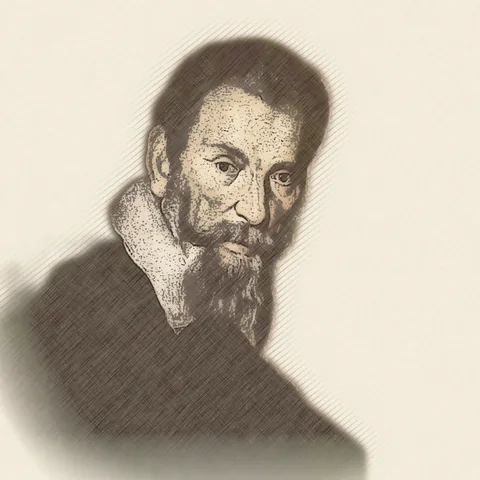 1567 – 1643Baroque
Claudio Monteverdi
Bridging Renaissance and Baroque, he made dramatic emotion central to music.
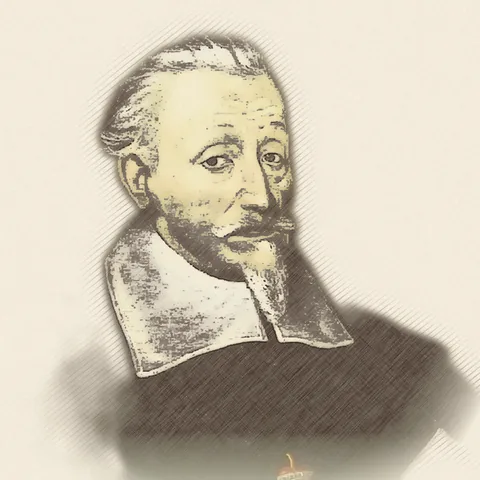 1585 – 1672Baroque
Heinrich Schütz
He brought Italian expressive innovations to German sacred music.
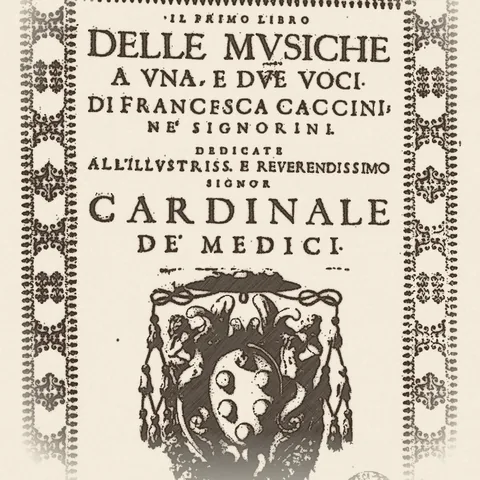 1587 – c. 1641Baroque
Francesca Caccini
A Medici court musician, she was a pioneer of early Italian musical theatre.
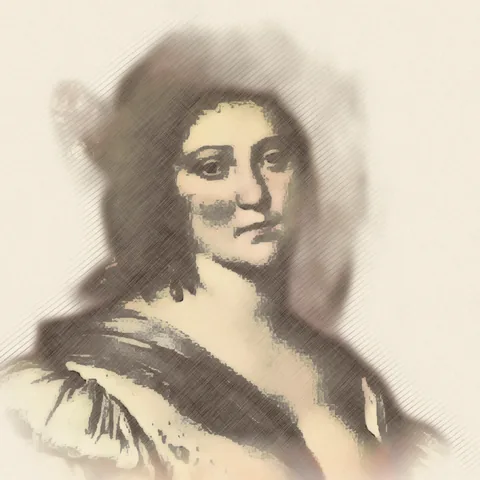 1619 – 1677Baroque
Barbara Strozzi
A Venetian singer and composer who published extensive vocal collections under her own name.
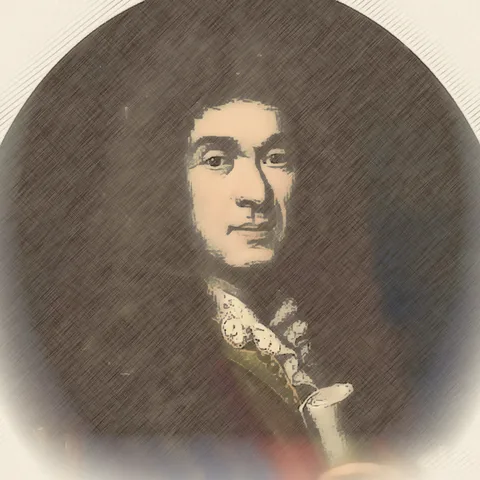 1632 – 1687Baroque
Jean-Baptiste Lully
At Louis XIV's court, he shaped French opera and ballet music.
 1643 – 1704Baroque
Marc-Antoine Charpentier
A French composer of sacred and theatre music, he mastered Italian style.