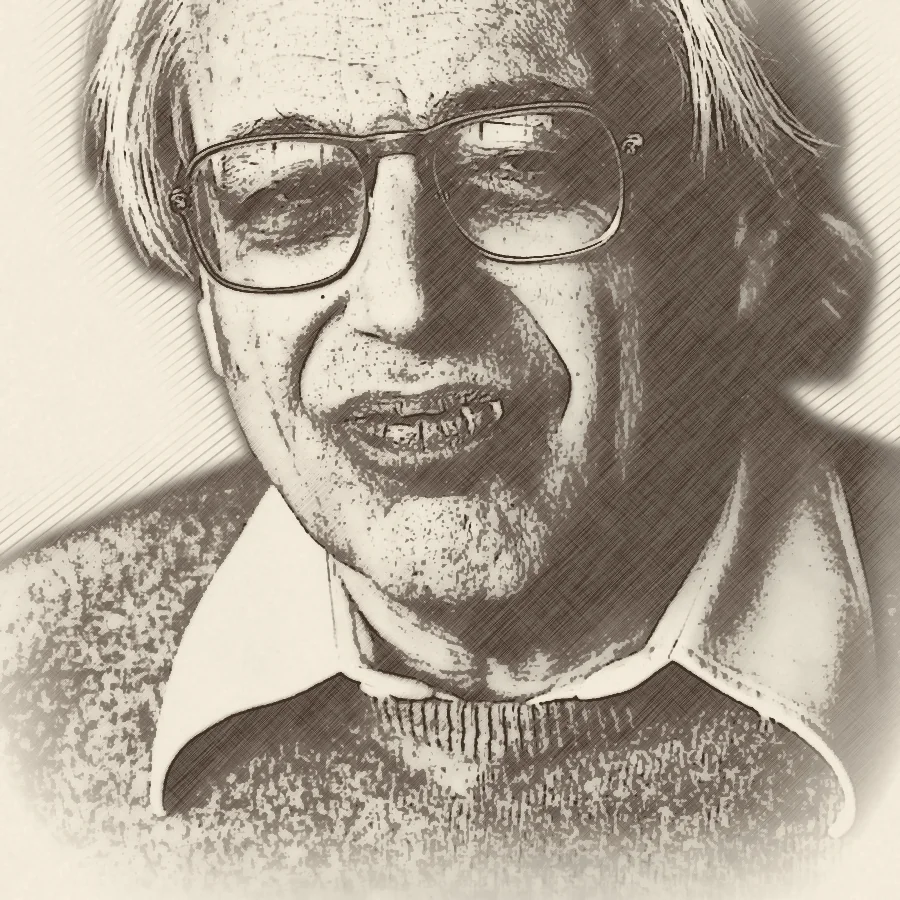
 20th century and today
György Ligeti
He created shifting sonic textures that blur the boundary between melody and sound mass.
A life and its times
The milestones of the life and work, the contemporaries and the major world events, on a single line of time.
A life at a glance
- 1923Birth
Born on 28 May in Transylvania into a Hungarian-Jewish family
- 1929Meanwhile
Wall Street Crash
- 1941Trainingage 18
Studies at the Kolozsvár (Cluj) conservatory
- 1944Landmarkage 21
Sent to forced labour; his father and brother die in the camps
- 1945Trainingage 22
Studies at the Liszt Academy in Budapest, where he later teaches
- 1945Meanwhile
End of the Second World War; United Nations founded
- 1948Meanwhile
The long-playing record (LP) goes on sale
- 1953Workage 30
Musica ricercata, for piano
- 1956Journeyage 33
Flees Hungary after the crushing of the revolution
- 1957Careerage 34
Works at the Cologne electronic studio
- 1961Workage 38
Atmosphères: music becomes a cloud of sound
- 1962Workage 39
Symphonic Poem for 100 Metronomes
- 1963Meanwhile
Martin Luther King’s “I have a dream” speech
- 1964Meanwhile
Robert Moog presents his synthesizer
- 1966Workage 43
Lux aeterna, for choir
- 1968Landmarkage 45
His music is used in the film 2001: A Space Odyssey
- 1977Meanwhile
Voyager probes launched with their Golden Record
- 1978Workage 55
Le Grand Macabre, opera
- 1982Meanwhile
The compact disc (CD) is launched
- 1985Workage 62
First book of Études for piano
- 1991Meanwhile
The World Wide Web is born
- 2006Deathage 83
Dies in Vienna on 12 June
Listen
Excerpts from freely licensed recordings, with their performers and licences.
György Ligeti’s music is still protected by copyright: to respect the rights holders, no excerpt is hosted here. You can hear it on the radio, in concert or on licensed streaming platforms.
Listen to complete works on Wikimedia Commons
Wikimedia Commons is a free media library: you will find the complete recordings there, with their reuse conditions.
The life of György Ligeti
György Ligeti was born on 28 May 1923 at Dicsőszentmárton (now Târnăveni) in Transylvania, then part of Romania, into a Hungarian Jewish family. His father was an economist and writer, his mother an ophthalmologist. As a child he dreamed of being a scientist, a chemist or physicist, and all his life he kept a passion for mathematics, biology and fractals. He began piano late, at fourteen, but quickly composed his first pieces.
He studied at the Kolozsvár (Cluj) conservatory from 1941, as antisemitic laws barred him from university to study physics. In 1944 he was sent to a Hungarian army forced-labour camp. His father, his brother and other relatives were deported and died in the Nazi camps; only his mother survived Auschwitz. Ligeti narrowly escaped death in a bombing raid and walked back to Kolozsvár at the end of the war.
In 1945 he moved to Budapest and entered the Franz Liszt Academy of Music, studying with Sándor Veress and Ferenc Farkas, and from 1950 he taught harmony and counterpoint there. Like Bartók, he collected folk songs in Romania. But the communist regime required artists to write simple, popular music; modern Western music was banned. Ligeti secretly composed daring works such as Musica ricercata (1953), a cycle of eleven piano pieces in which the first uses only two notes, the second three, and so on.
In December 1956, after the Soviet army crushed the Hungarian revolution, he fled Hungary with his wife Vera, crossing the Austrian border on foot under fire. He settled in Vienna, then worked at the electronic music studio of Cologne radio with Karlheinz Stockhausen. There he discovered the Western avant-garde and composed electronic works. He became an Austrian citizen in 1967.
Ligeti then invented an entirely new style. In Apparitions (1959) and above all Atmosphères (1961) for large orchestra there is no longer melody or rhythm: dozens of instruments each play a slightly different part, creating huge sheets of sound, slowly shifting “clouds” of sound. He called this technique “micropolyphony”. In 1962 he composed the provocative Poème symphonique for a hundred metronomes, each ticking at its own speed until they stop one by one.
In 1968 the director Stanley Kubrick used several of his works, including Atmosphères, Lux aeterna (1966) and the Requiem, in his film 2001: A Space Odyssey, without asking his permission. Ligeti, at first furious, then became world-famous thanks to the film. He also composed the opera Le Grand Macabre (1978), an apocalyptic, burlesque farce, and the Horn Trio (1982), and was professor of composition at the Hamburg Hochschule für Musik from 1973 to 1989.
From the 1980s he became interested in the complex rhythms of African music, in Conlon Nancarrow’s music for player piano and in fractals. He composed three books of Études for piano (1985–2001), regarded as among the most important since Debussy, and piano, violin and cello concertos. He received many honours, including the Kyoto Prize. He died in Vienna on 12 June 2006, aged eighty-three. He is regarded as one of the greatest composers of the second half of the twentieth century.
Works to know
- 1953
Musica ricercata
Each piece uses one more note than the last.
- 1961
Atmosphères
A cloud of sound with no recognisable tune or rhythm.
- 1962
Symphonic Poem for 100 Metronomes
A hundred metronomes started at once…
- 1966
Lux aeterna
Floating choir, as if suspended in space.
- 1978
Le Grand Macabre
Burlesque opera about the end of the world.
- 1985
Piano Études
18 virtuoso études with dizzying rhythms.
Anecdotes
Kubrick used his music in 2001 without asking his permission!
In Musica ricercata, the first piece uses only two notes.
He fled Hungary on foot in 1956, crossing the Austrian border under fire.
He called his technique of sound clouds made of dozens of interwoven lines “micropolyphony”.
Same era · 20th century and today
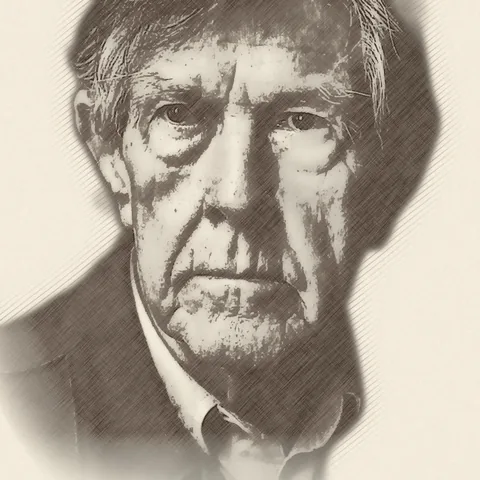 1912 – 199220th century and today
John Cage
A radical experimenter who questioned chance, silence and the act of listening.
 1913 – 197620th century and today
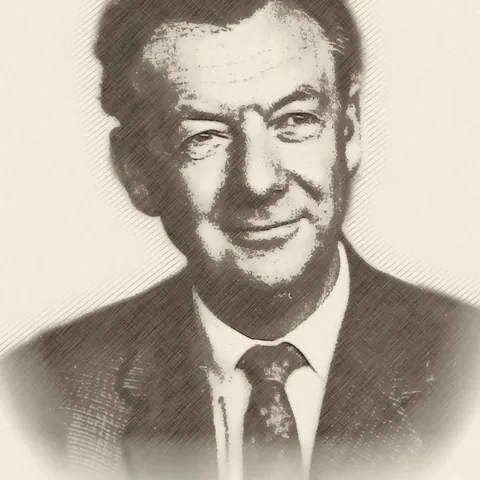
Benjamin Britten
He revitalized English opera and wrote accessible yet sophisticated music.
 1918 – 199020th century and today
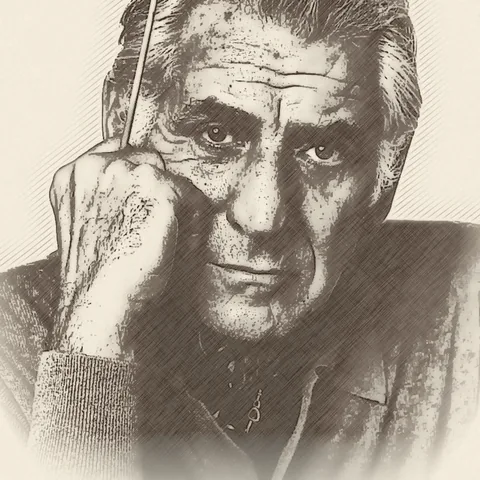
Leonard Bernstein
Conductor, educator and composer, he connected classical music, jazz and musical theatre.
 1931 – 202520th century and today
Sofia Goubaïdoulina
A Tatarstan-born composer who explored spirituality, timbre and unusual instruments.
 1935 –20th century and today
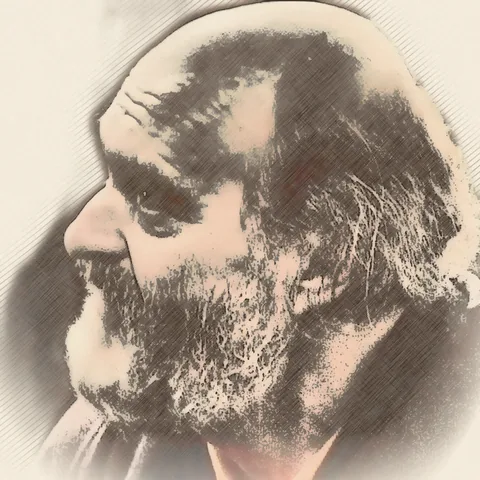
Arvo Pärt
His tintinnabuli style seeks simplicity and spiritual resonance.
 1935 –20th century and today
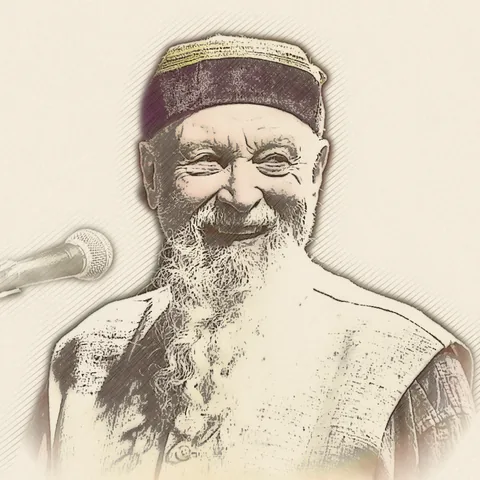
Terry Riley
An American minimalist composer who explored repetition and improvisation.