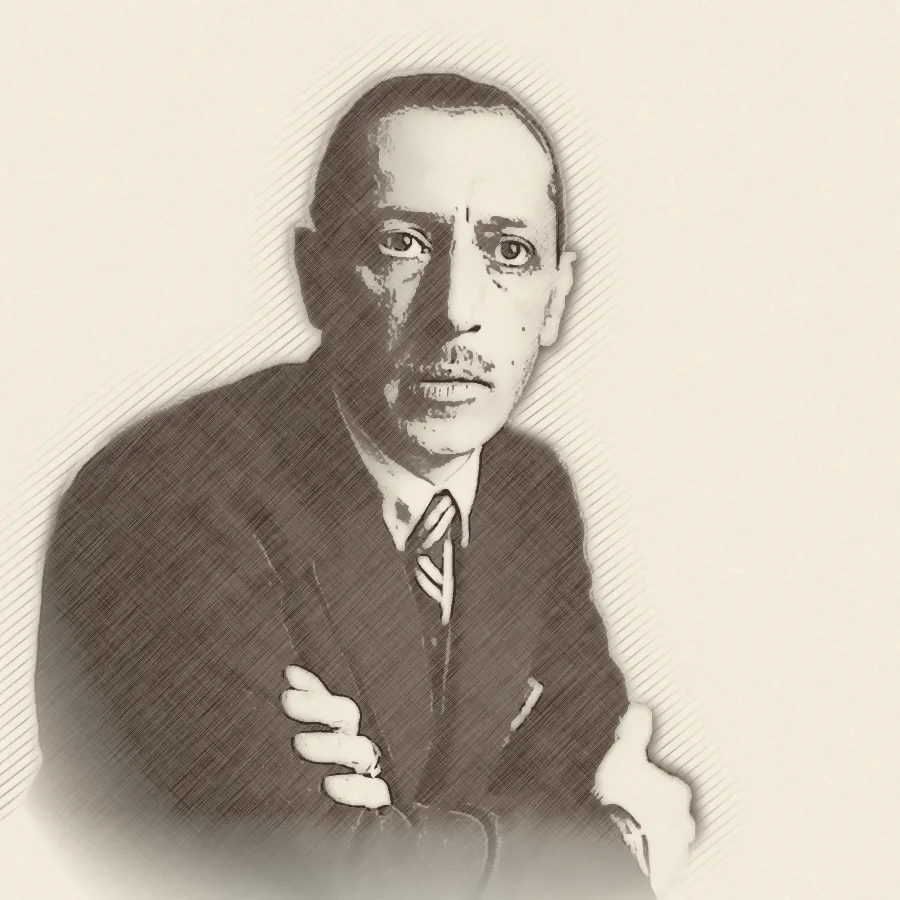
A life and its times
The milestones of the life and work, the contemporaries and the major world events, on a single line of time.
A life at a glance
- 1882Birth
Born on 17 June in Oranienbaum; his father sings at the Mariinsky
- 1895Meanwhile
The Lumière brothers’ first cinema show
- 1901Trainingage 19
Studies law in St Petersburg
- 1902Trainingage 20
Becomes a pupil of Rimsky-Korsakov
- 1910Workage 28
The Firebird for Diaghilev’s Ballets Russes in Paris
- 1911Workage 29
Petrushka
- 1912Meanwhile
The Titanic sinks
- 1913Workage 31
The Rite of Spring: the premiere turns into a riot
- 1914Milestoneage 32
Settles in Switzerland during the war
- 1918Workage 36
The Soldier’s Tale
- 1918Meanwhile
End of the First World War
- 1920Workage 38
Pulcinella: start of his neoclassical period; moves to France
- 1927Meanwhile
First talking picture (The Jazz Singer)
- 1930Workage 48
Symphony of Psalms
- 1939Milestoneage 57
Emigrates to the United States
- 1945Meanwhile
End of the Second World War; United Nations founded
- 1948Meanwhile
The long-playing record (LP) goes on sale
- 1951Workage 69
The Rake’s Progress, opera
- 1962Journeyage 80
Triumphant return to Russia after 48 years away
- 1963Meanwhile
Martin Luther King’s “I have a dream” speech
- 1964Meanwhile
Robert Moog presents his synthesizer
- 1971Deathage 89
Dies in New York on 6 April; buried in Venice
Listen
Excerpts from freely licensed recordings, with their performers and licences.
Igor Stravinsky’s music is still protected by copyright: to respect the rights holders, no excerpt is hosted here. You can hear it on the radio, in concert or on licensed streaming platforms.
Listen to complete works on Wikimedia Commons
Wikimedia Commons is a free media library: you will find the complete recordings there, with their reuse conditions.
The life of Igor Stravinsky
Igor Stravinsky was born on 17 June 1882 (5 June by the old Russian calendar) at Oranienbaum, a seaside resort near St Petersburg where his family spent the summer. His father, Fyodor, was one of the most famous bass singers at the Mariinsky Theatre, and the boy grew up amid rehearsals and his father’s huge library. He took piano lessons from the age of nine, but his parents, who did not think him gifted enough for a musical career, steered him towards law.
In 1901 he began studying law at the University of St Petersburg. There he became friends with Vladimir Rimsky-Korsakov, the composer’s son. In 1902 he showed his first compositions to Nikolai Rimsky-Korsakov, who agreed to give him private lessons. For six years the master taught him orchestration and became like a second father to him after Fyodor Stravinsky’s death in 1902. In 1906 Igor married his cousin Catherine Nossenko; they had four children.
In 1909 the impresario Sergei Diaghilev heard two short orchestral pieces by Stravinsky in St Petersburg and commissioned a ballet for his company, the Ballets Russes, then triumphing in Paris. The Firebird, premiered at the Paris Opéra in 1910 and based on a Russian fairy tale, was an instant triumph: at twenty-eight Stravinsky became famous. Petrushka followed (1911), the story of a fairground puppet that comes to life, with its famous chords in two superimposed keys, and then The Rite of Spring.
On 29 May 1913 the premiere of The Rite of Spring at the Théâtre des Champs-Élysées, choreographed by Vaslav Nijinsky, caused one of the greatest scandals in the history of music. The ballet, depicting pagan rites of ancient Russia in which a young girl dances herself to death to celebrate spring, bewildered audiences with its violent, irregular rhythms, its dissonances and its choreography. The audience hissed, shouted and fought; the music could no longer be heard. A year later, performed in concert, the Rite was acclaimed. It is now regarded as one of the founding works of modern music.
During the First World War Stravinsky settled in Switzerland. Cut off from Russia, where the 1917 revolution cost him his property, he composed works for small forces, such as The Soldier’s Tale (1918), with the writer Charles-Ferdinand Ramuz, about a soldier who sells his violin to the devil. In 1920 he moved to France. With the ballet Pulcinella (1920), based on eighteenth-century music attributed to Pergolesi, he began his “neoclassical” period, revisiting forms of the past through modern eyes.
In the 1920s and 1930s he composed the opera-oratorio Oedipus Rex (1927), on a Latin text by Jean Cocteau, the ballet Apollon musagète and the Symphony of Psalms (1930), and pursued a career as pianist and conductor. He became a French citizen in 1934. But in 1938–39 he lost his eldest daughter, his wife and his mother, all three to tuberculosis. At the start of the Second World War he emigrated to the United States, where he married the painter Vera de Bosset and settled in Hollywood. He became an American citizen in 1945.
He composed the opera The Rake’s Progress (1951), after William Hogarth’s engravings, and then, past seventy, embraced the serial technique of Schoenberg and Webern that he had long opposed. In 1962 he returned to Russia for the first time in forty-eight years and was welcomed triumphantly. He died in New York on 6 April 1971, aged eighty-eight, and was buried in Venice on the island of San Michele, near Diaghilev. He is regarded as one of the most influential composers of the twentieth century.
Works to know
- 1910
The Firebird
Russian tale with a magic bird and a sorcerer.
- 1911
Petrushka
A puppet who comes to life at the fair.
- 1913
The Rite of Spring
Savage rhythms — the music that caused a scandal.
- 1918
The Soldier’s Tale
A soldier sells his violin to the devil.
- 1920
Pulcinella
Ballet on revisited 18th-century tunes.
- 1930
Symphony of Psalms
Choral work without violins or violas.
Anecdotes
The Rite of Spring appears in Disney’s Fantasia — with dinosaurs!
He was a Russian, then French, then American citizen.
The 1913 premiere of The Rite of Spring caused such an uproar that the dancers could no longer hear the orchestra.
He returned to Russia in 1962 after forty-eight years away.
Same era · Modernism
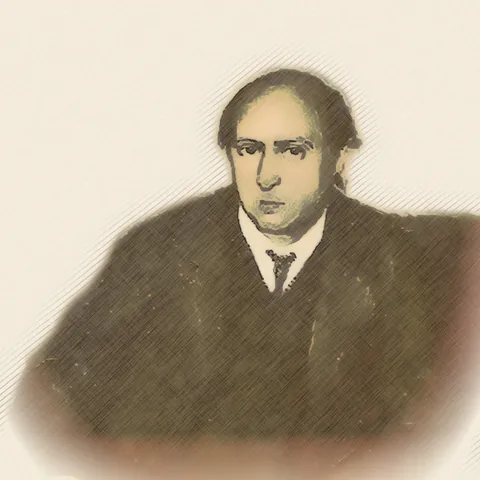 1874 – 1951Modernism
Arnold Schönberg
A pioneer of atonality and twelve-tone composition who redefined musical structure.
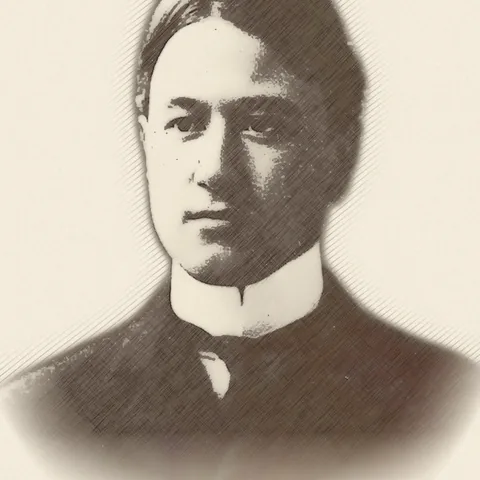 1874 – 1954Modernism
Charles Ives
An experimental American composer who layered hymns, marches and tonalities.
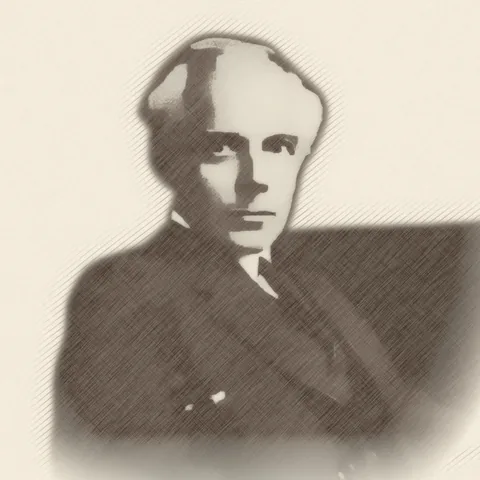 1881 – 1945Modernism
Béla Bartók
A researcher of folk music, he transformed rhythms and modes into a modern language.
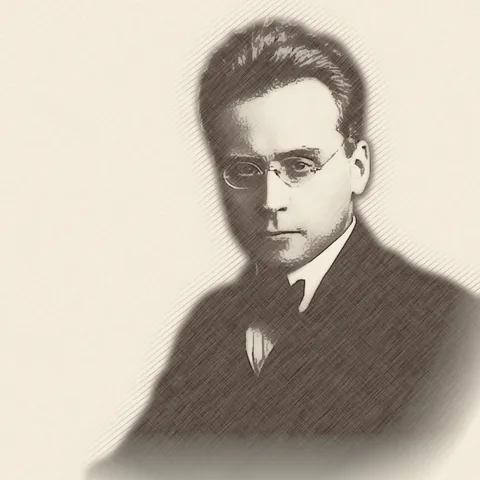 1883 – 1945Modernism
Anton Webern
An Austrian composer who distilled ideas into brief, precise forms.
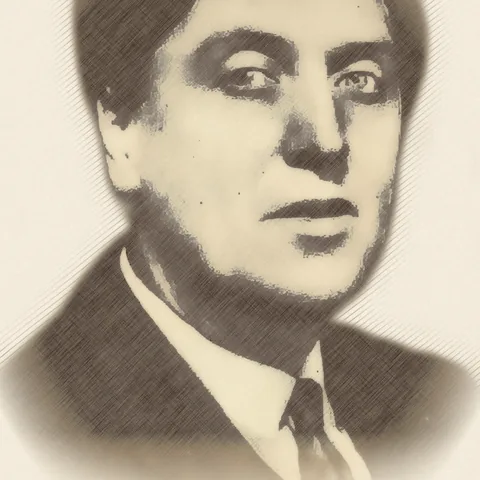 1885 – 1935Modernism
Alban Berg
A pupil of Schoenberg, he combined modern techniques with dramatic intensity.
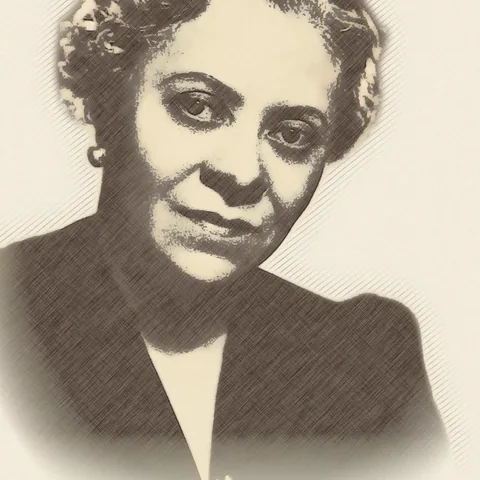 1887 – 1953Modernism
Florence Price
The first Black woman to have a symphony performed by a major US orchestra, she blended classical and African American traditions.