 Late Romantic
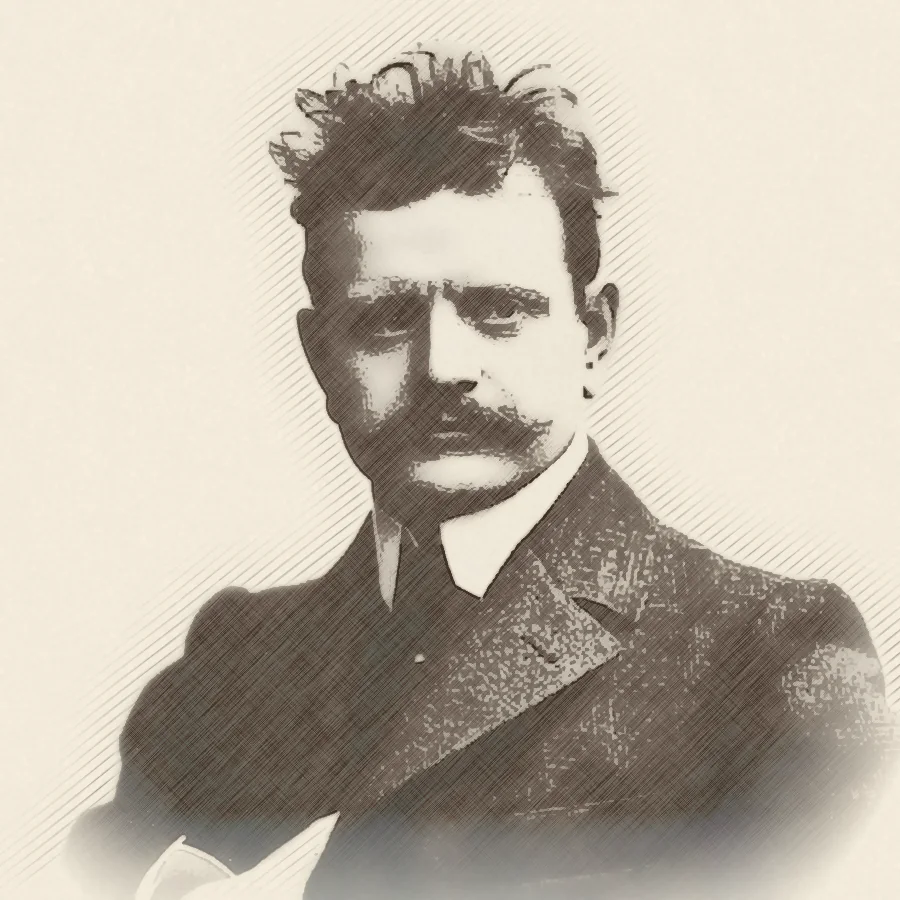
Jean Sibelius
He composed organic forms inspired by Finnish landscapes and culture.
A life and its times
The milestones of the life and work, the contemporaries and the major world events, on a single line of time.
A life at a glance
- 1865Birth
Born in Hämeenlinna on 8 December
- 1868Private lifeage 3
Death of his father, a doctor
- 1869Meanwhile
The Suez Canal opens
- 1875Meanwhile
The Palais Garnier opera house opens in Paris
- 1885Trainingage 20
Starts law in Helsinki, then devotes himself to music
- 1889Journeyage 24
Studies in Berlin, then Vienna
- 1889Meanwhile
The Eiffel Tower opens for the World’s Fair
- 1892Workage 27
Kullervo, after the Finnish epic Kalevala; marries Aino Järnefelt
- 1896Workage 31
Lemminkäinen Suite, with The Swan of Tuonela
- 1899Workage 34
Finlandia, a symbol of resistance to Russia; Symphony No. 1
- 1904Milestoneage 39
Settles at his villa Ainola, among the forests
- 1905Workage 40
Final version of the Violin Concerto
- 1905Meanwhile
Einstein publishes special relativity
- 1915Workage 50
Symphony No. 5, for his 50th birthday, celebrated as a national day
- 1917Landmarkage 52
Finland becomes independent
- 1917Meanwhile
Russian Revolution
- 1924Workage 59
Symphony No. 7, in a single movement
- 1926Workage 61
Tapiola, his last major work
- 1927Meanwhile
First talking picture (The Jazz Singer)
- 1945Meanwhile
End of the Second World War; United Nations founded
- 1948Meanwhile
The long-playing record (LP) goes on sale
- 1957Deathage 92
Dies at Ainola on 20 September, aged 91
Listen
Excerpts from freely licensed recordings, with their performers and licences.
Jean Sibelius’s music is still protected by copyright: to respect the rights holders, no excerpt is hosted here. You can hear it on the radio, in concert or on licensed streaming platforms.
Listen to complete works on Wikimedia Commons
Wikimedia Commons is a free media library: you will find the complete recordings there, with their reuse conditions.
The life of Jean Sibelius
Jean Sibelius was born on 8 December 1865 at Hämeenlinna in southern Finland, then an autonomous grand duchy of the Russian Empire. Christened Johan Julius Christian, he later adopted the name Jean, after a seafaring uncle. His father, an army doctor, died of typhus in 1868, and the family then lived in difficult circumstances. They spoke Swedish, the language of the Finnish elite; Jean learned Finnish at school. He spent his summers in the countryside among forests and lakes, a landscape that would inspire all his work.
He began piano at seven and then, at fourteen, the violin, which became his passion: he dreamed of being a great violinist. In 1885 he enrolled in law at the University of Helsinki but soon gave it up to study at the Music Institute. Having come to the violin too late for a virtuoso career, he turned to composition. From 1889 to 1891 he continued his studies in Berlin and then in Vienna, where he discovered Bruckner and great orchestral music.
Back in Finland he became enthralled by the Kalevala, the Finnish national epic, a collection of ancient folk poems, and by the national movement seeking to assert Finnish identity against Russian rule. In 1892 he premiered Kullervo, a vast symphony for chorus and soloists inspired by the Kalevala, which was a great success and made him a national hero. That same year he married Aino Järnefelt, from a family of artists committed to the Finnish cause. They had six daughters.
In the 1890s he composed the Karelia Suite (1893) and the Lemminkäinen Suite (1896), which includes The Swan of Tuonela, in which a solitary cor anglais represents the swan gliding on the river of the realm of the dead. In 1899, as Russia tightened its censorship, he wrote music for a patriotic event that became Finlandia. This work, with its closing hymn, became the symbol of Finnish resistance; the Russian authorities sometimes banned it under its real name. That same year he composed his Symphony No. 1.
In 1904, to escape the bustle of Helsinki and the temptation of alcohol, he moved with his family to Ainola, a wooden villa built in the forest near Lake Tuusula at Järvenpää. He lived there for more than fifty years. In 1905 he completed the final version of his Violin Concerto, one of the most performed of the twentieth century. He also composed the famous Valse triste (1904) and a series of increasingly concentrated and original symphonies. In 1908 an operation on a throat tumour forced him to give up alcohol and tobacco for a while.
For his fiftieth birthday in 1915 Finland held a national celebration, and he conducted his Symphony No. 5. He noted in his diary that the idea for its great final theme came to him while watching sixteen swans fly over his house. In 1917 Finland became independent. Sibelius composed his Symphony No. 6 (1923), then the Seventh (1924), in a single movement of about twenty minutes, and in 1926 Tapiola, a tone poem about Tapio, the spirit of the forest.
After Tapiola Sibelius published no major work during the last thirty years of his life: this is the “silence of Järvenpää”. He worked for a long time on an Eighth Symphony but, dissatisfied, probably burned the manuscript around 1945. He received visitors from all over the world and remained a revered figure in Finland. He died at Ainola on 20 September 1957, aged ninety-one. He is buried in the garden of his home, now a museum.
Works to know
- 1893
Karelia Suite
Joyful music about the Karelia region.
- 1896
The Swan of Tuonela
A swan glides on the river of the dead, on cor anglais.
- 1899
Finlandia
A hymn that became the symbol of Finland.
- 1902
Symphony No. 2
Heroic symphony with a triumphant finale.
- 1904
Valse triste
Very popular melancholy waltz.
- 1905
Violin Concerto
His only concerto, both icy and burning.
- 1915
Symphony No. 5
The finale was inspired by a flight of wild swans.
Anecdotes
The end of his Fifth Symphony was inspired by sixteen swans in flight.
He stopped publishing for 30 years — known as the ‘silence of Järvenpää’.
The Russian authorities sometimes banned Finlandia, which was then played under other titles.
He is buried in the garden of his home, Ainola, in the middle of the forest.
Same era · Late Romantic
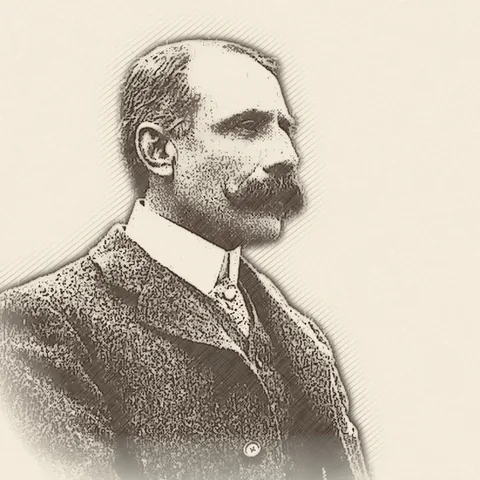 1857 – 1934Late Romantic
Edward Elgar
An English composer combining orchestral grandeur and intimate lyricism.
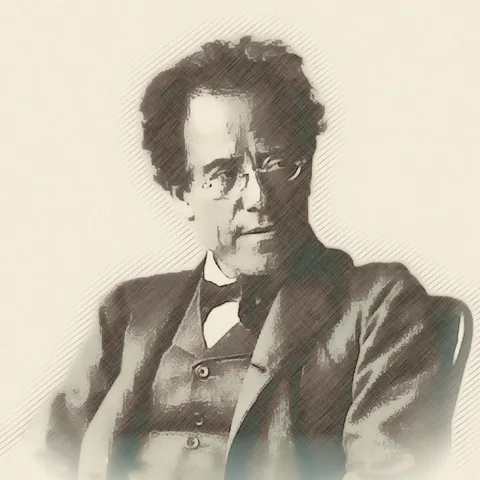 1860 – 1911Late Romantic
Gustav Mahler
His vast symphonies confront nature, irony, love and existential questions.
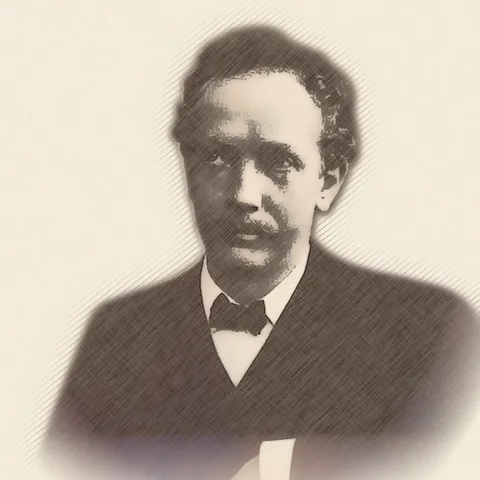 1864 – 1949Late Romantic
Richard Strauss
He pushed Romantic orchestration toward extraordinary richness and contrast.
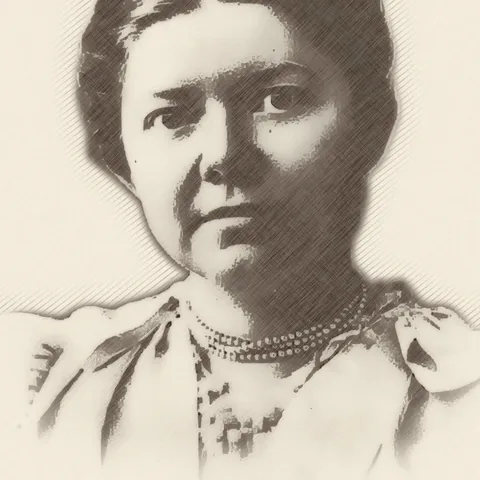 1867 – 1944Late Romantic
Amy Beach
An American pianist and composer who excelled in symphonic and chamber music.
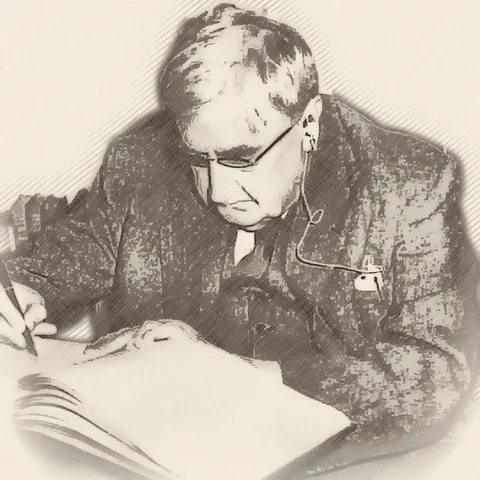 1872 – 1958Late Romantic
Ralph Vaughan Williams
An English composer inspired by folk songs and choral tradition.
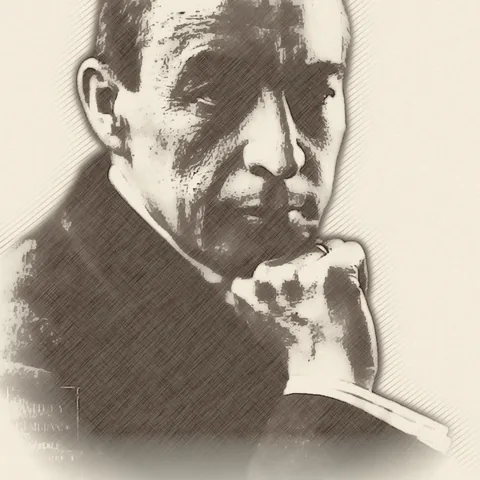 1873 – 1943Late Romantic
Sergueï Rachmaninov
A virtuoso pianist, he carried Russian lyric Romanticism into the twentieth century.