 Late Romantic
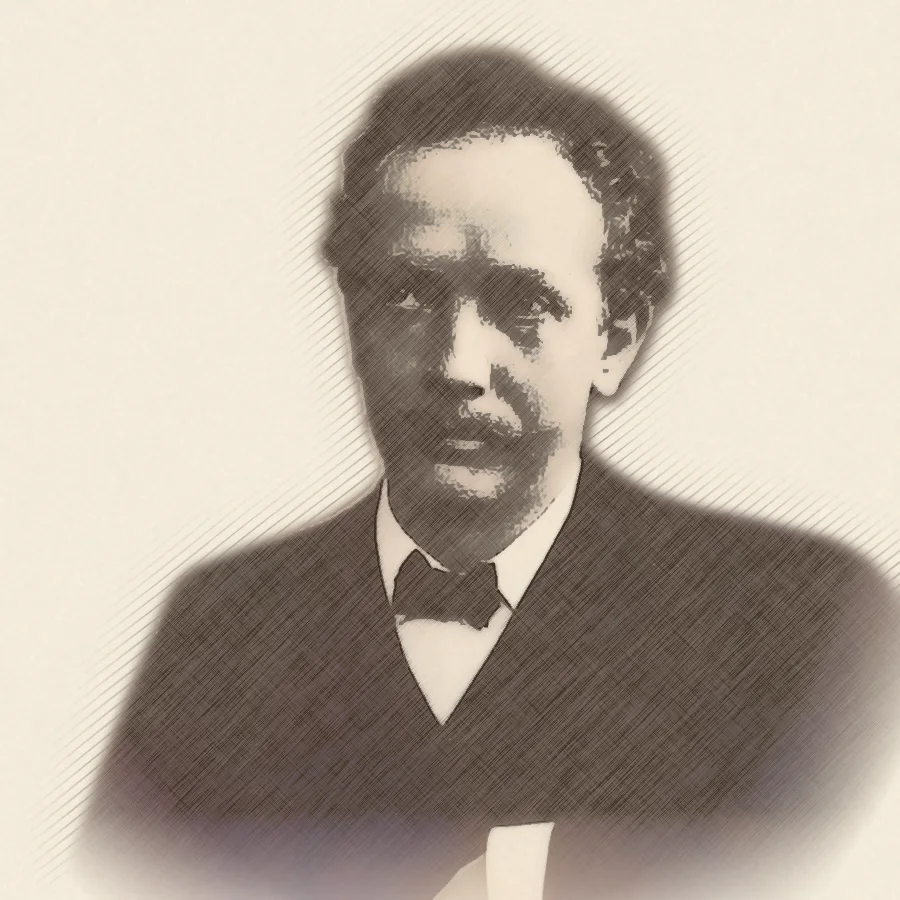
Richard Strauss
He pushed Romantic orchestration toward extraordinary richness and contrast.
A life and its times
The milestones of the life and work, the contemporaries and the major world events, on a single line of time.
A life at a glance
- 1864Birth
Born in Munich on 11 June, son of the horn player Franz Strauss
- 1869Meanwhile
The Suez Canal opens
- 1870Workage 6
Composes his first pieces at 6
- 1875Meanwhile
The Palais Garnier opera house opens in Paris
- 1885Careerage 21
Assistant to the conductor Hans von Bülow in Meiningen
- 1889Workage 25
Premiere of Don Juan: fame
- 1889Meanwhile
The Eiffel Tower opens for the World’s Fair
- 1894Private lifeage 30
Marries the soprano Pauline de Ahna
- 1895Workage 31
Till Eulenspiegel
- 1896Workage 32
Also sprach Zarathustra
- 1898Careerage 34
Conductor at the Berlin Court Opera
- 1905Workage 41
Salome causes a scandal
- 1905Meanwhile
Einstein publishes special relativity
- 1911Workage 47
Der Rosenkavalier, with the poet Hofmannsthal
- 1914Meanwhile
The First World War begins
- 1919Careerage 55
Co-director of the Vienna State Opera
- 1922Meanwhile
Public radio broadcasting begins (BBC, Radio Tour Eiffel)
- 1933Careerage 69
President of the Reich Music Chamber, a post he is forced out of in 1935
- 1939Meanwhile
The Second World War begins
- 1945Workage 81
Metamorphosen, a lament for ruined Germany
- 1948Workage 84
Four Last Songs
- 1948Meanwhile
The long-playing record (LP) goes on sale
- 1949Deathage 85
Dies in Garmisch on 8 September
Listen
Excerpts from freely licensed recordings, with their performers and licences.
Excerpts last up to 90 seconds. Richard Strauss’s compositions are in the public domain; each recording is streamed from Wikimedia Commons under the licence shown, credited to its performers or uploader.
Listen to complete works on Wikimedia Commons
Wikimedia Commons is a free media library: you will find the complete recordings there, with their reuse conditions.
- Complete recordingAlso sprach Zarathustra — Introduction
- Complete recordingDon Juan (excerpt)
- Complete recordingPiano Sonata Op. 5 — I
- Search for the workAlso sprach Zarathustra
- Search for the workDer Rosenkavalier
- Search for the workTill Eulenspiegel
- Search for the workDon Juan
- Search for the workSalome
- Search for the workFour Last Songs
- Search for the workAn Alpine Symphony
- Everything on CommonsAll recordings of Richard Strauss
The life of Richard Strauss
Richard Strauss was born in Munich on 11 June 1864. His father, Franz Strauss, was principal horn of the Munich Court Opera orchestra, one of the finest horn players in Germany, a very conservative musician who loathed Wagner’s music even though he played his operas. His mother came from the wealthy Pschorr brewing family. Richard was no relation to Johann Strauss, the Viennese waltz king. He began piano at four and composed his first pieces at six.
He received a solid classical training but did not attend a conservatory. His early works, in the style of Mendelssohn and Brahms, were performed while he was still at school. In 1885 the famous conductor Hans von Bülow took him on as assistant at Meiningen, and Strauss then succeeded him as head of the orchestra. There the violinist Alexander Ritter introduced him to Wagner and Liszt and encouraged him to write “programme music” that tells a story. He then became a conductor at the Munich Opera and later in Weimar.
In 1889 his tone poem Don Juan, premiered in Weimar, made him famous overnight with its drive, dazzling orchestral colours and virtuosity. A series of masterpieces followed: Death and Transfiguration (1890); Till Eulenspiegel (1895), recounting the pranks of a folk character up to his hanging; Also sprach Zarathustra (1896), after Nietzsche, whose opening sunrise Stanley Kubrick used in the film 2001: A Space Odyssey; Don Quixote (1897); and Ein Heldenleben (1898), in which the hero is himself.
In 1894 he married the soprano Pauline de Ahna, a singer with an explosive temperament known for her rages, whom he adored and for whom he wrote many songs. In 1898 he became conductor of the Berlin Court Opera. He then turned to opera. In 1905 Salome, after Oscar Wilde’s play, caused a scandal with its violence and sensuality, including the famous “Dance of the Seven Veils”, but triumphed throughout Europe; his royalties allowed him to build a villa at Garmisch in the Bavarian Alps. Elektra (1909), after Sophocles, went even further in dissonance.
With the Austrian poet Hugo von Hofmannsthal he formed one of the most famous partnerships in operatic history. Their Der Rosenkavalier (1911), a nostalgic comedy set in eighteenth-century Vienna, with its waltzes and sublime final trio, was a phenomenal success: special trains brought audiences from Berlin to Dresden. Together they wrote Ariadne auf Naxos (1912), Die Frau ohne Schatten (1919) and Arabella (1933). Strauss also composed An Alpine Symphony (1915), depicting the ascent of a mountain with wind and thunder machines. From 1919 to 1924 he co-directed the Vienna Opera.
In 1933, when the Nazis came to power, Strauss, then the most famous living German composer, accepted the presidency of the Reich Music Chamber, believing he could protect German music. But he was removed in 1935 after a letter to his Jewish librettist Stefan Zweig criticising the regime was intercepted by the Gestapo. He continued to live in Germany, partly to protect his daughter-in-law, who was of Jewish descent, and his grandchildren. His stance towards the regime remains much debated.
The destruction of German opera houses by bombing devastated him: in 1945 he composed Metamorphosen, an elegy for twenty-three strings mourning the destroyed German culture. After the war he lived for a time in Switzerland. At eighty-four he composed his Four Last Songs (1948), of luminous serenity, on poems by Hermann Hesse and Joseph von Eichendorff meditating on evening and death. He died at Garmisch on 8 September 1949. At his funeral the final trio from Der Rosenkavalier was sung.
Works to know
- 1888
Don Juan
Fiery symphonic poem.
Listen on Wikimedia Commons - 1895
Till Eulenspiegel
The pranks of a merry rogue.
Listen on Wikimedia Commons - 1896
Also sprach Zarathustra
Its sunrise opening became famous through the film 2001.
Listen on Wikimedia Commons - 1905
Salome
Scandalous opera after Oscar Wilde.
Listen on Wikimedia Commons - 1911
Der Rosenkavalier
Viennese comedy full of waltzes.
Listen on Wikimedia Commons - 1915
An Alpine Symphony
Climbing a mountain, storm included.
Listen on Wikimedia Commons - 1948
Four Last Songs
Serene farewell for soprano and orchestra.
Listen on Wikimedia Commons
Anecdotes
In An Alpine Symphony he uses a wind machine and a thunder machine!
He was not related to Johann Strauss, the waltz king.
The sunrise from Also sprach Zarathustra opens Stanley Kubrick’s film 2001: A Space Odyssey.
For Der Rosenkavalier, special trains brought audiences from Berlin to Dresden.
Same era · Late Romantic
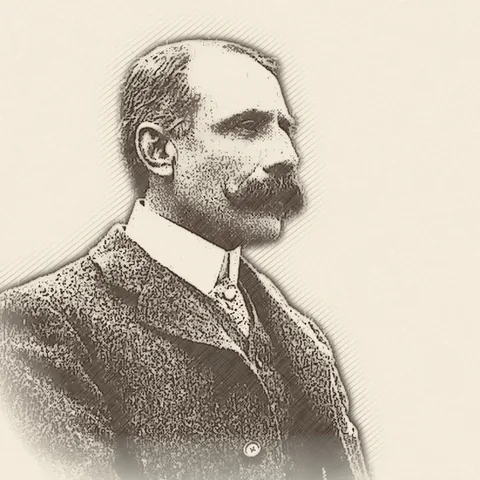 1857 – 1934Late Romantic
Edward Elgar
An English composer combining orchestral grandeur and intimate lyricism.
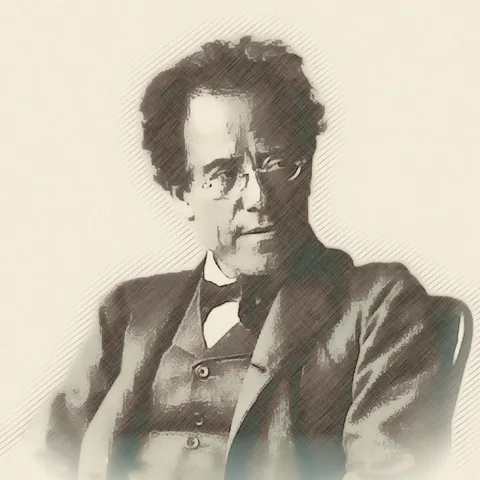 1860 – 1911Late Romantic
Gustav Mahler
His vast symphonies confront nature, irony, love and existential questions.
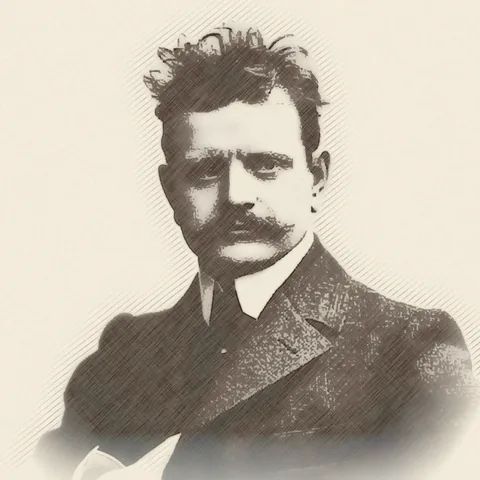 1865 – 1957Late Romantic
Jean Sibelius
He composed organic forms inspired by Finnish landscapes and culture.
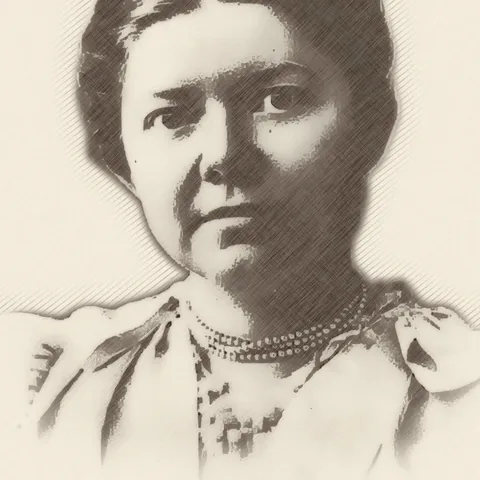 1867 – 1944Late Romantic
Amy Beach
An American pianist and composer who excelled in symphonic and chamber music.
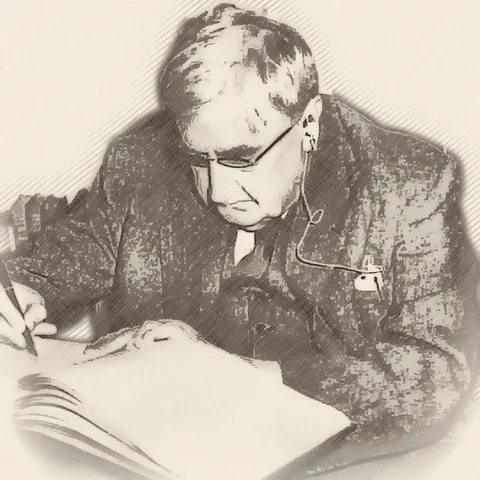 1872 – 1958Late Romantic
Ralph Vaughan Williams
An English composer inspired by folk songs and choral tradition.
 1873 – 1943Late Romantic
Sergueï Rachmaninov
A virtuoso pianist, he carried Russian lyric Romanticism into the twentieth century.