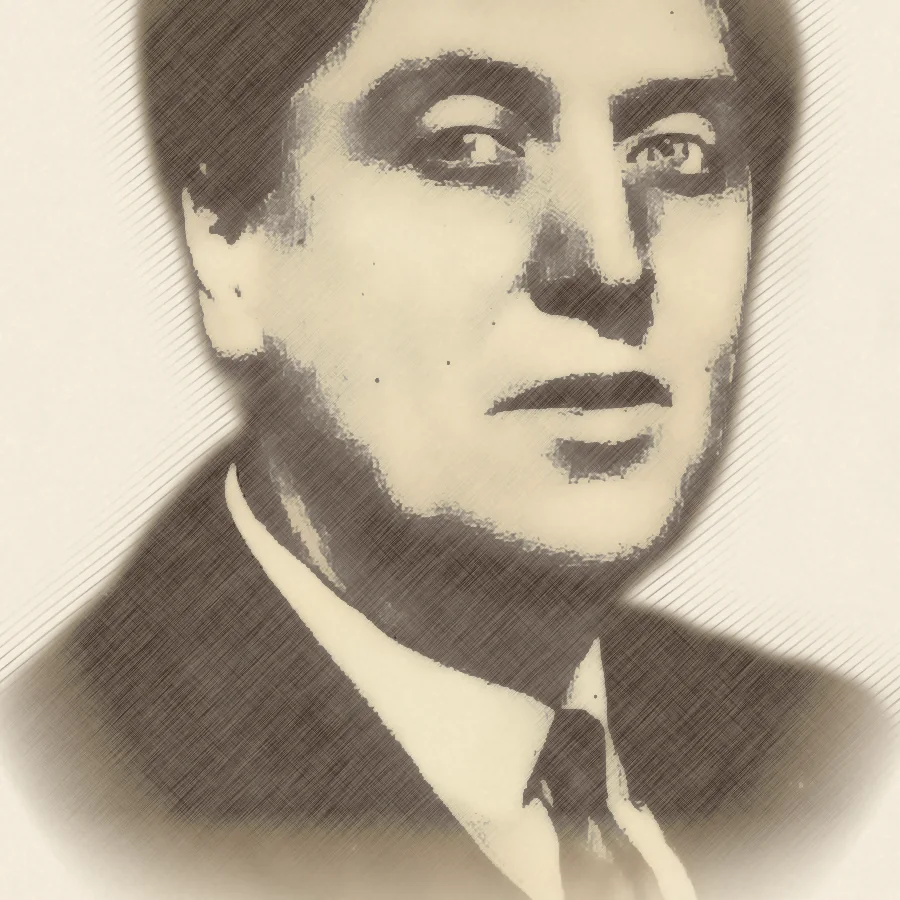
A life and its times
The milestones of the life and work, the contemporaries and the major world events, on a single line of time.
A life at a glance
- 1885Birth
Born in Vienna on 9 February
- 1889Meanwhile
The Eiffel Tower opens for the World’s Fair
- 1900Workage 15
Writes many songs without formal training
- 1903Meanwhile
First powered aeroplane flight (Wright brothers)
- 1904Trainingage 19
Becomes Arnold Schoenberg’s pupil
- 1905Meanwhile
Einstein publishes special relativity
- 1911Private lifeage 26
Marries Helene Nahowski
- 1912Meanwhile
The Titanic sinks
- 1913Workage 28
His Altenberg Songs spark the ‘Scandal Concert’
- 1914Workage 29
Sees Büchner’s play Woyzeck and decides to make it an opera
- 1915Careerage 30
Called up during the First World War
- 1917Meanwhile
Russian Revolution
- 1918Meanwhile
End of the First World War
- 1922Meanwhile
Public radio broadcasting begins (BBC, Radio Tour Eiffel)
- 1925Workage 40
Triumph of Wozzeck at the Berlin State Opera
- 1926Workage 41
Lyric Suite, which hides a secret message
- 1929Meanwhile
Wall Street Crash
- 1933Landmarkage 48
The Nazis ban his music in Germany
- 1935Workage 50
Violin Concerto ‘To the memory of an angel’
- 1935Deathage 50
Dies in Vienna on 24 December of blood poisoning
Listen
Excerpts from freely licensed recordings, with their performers and licences.
Alban Berg’s music is in the public domain, but Wikimedia Commons does not yet offer a freely licensed recording of these works. The links below lead to scores and searches on Commons; as soon as a free recording is published, it can be added here.
Listen to complete works on Wikimedia Commons
Wikimedia Commons is a free media library: you will find the complete recordings there, with their reuse conditions.
The life of Alban Berg
Alban Berg was born in Vienna on 9 February 1885 into a comfortable family: his father, Conrad, ran a business exporting books and religious objects. He grew up in a cultured household passionate about literature, theatre and music. At fifteen he began composing, with no training at all, many songs for voice and piano. His father’s death in 1900 left the family in financial difficulty. A tormented teenager, he suffered from asthma, an illness that stayed with him all his life.
In 1904 his brother Charly sent some of his songs, without telling him, to Arnold Schoenberg, who had advertised for pupils. Schoenberg immediately recognised his talent and agreed to teach him free of charge, since the family could not afford to pay. Berg became, with Anton Webern, the master’s most loyal pupil and friend. He then worked as a civil servant until an inheritance allowed him to devote himself to music. In 1908 he composed his single-movement Piano Sonata Op. 1.
In 1911 he married Helene Nahowski, a young singer of great beauty, despite her father’s opposition. His Altenberg Lieder, on short poems written on postcards by the poet Peter Altenberg, were partly premiered at the concert of 31 March 1913 in Vienna, which turned into a riot: the audience hissed, jeered and fought, and the concert had to be stopped. Berg was deeply hurt.
In May 1914 he saw a performance of Woyzeck, a play by Georg Büchner written in 1836: the story of a poor soldier humiliated and exploited by everyone, who ends up killing his companion Marie. Overwhelmed, Berg decided to make it into an opera. During the First World War he was called up into the Austrian army, but his poor health led to his being assigned to an office in the War Ministry. His army experience fed his compassion for the character of Wozzeck.
He worked on the opera for seven years. Wozzeck was premiered at the Berlin State Opera on 14 December 1925 under Erich Kleiber, after more than 130 rehearsals. Despite its very difficult atonal music it was an immense success, and the work was soon performed in many countries. Each scene is built on a classical musical form — suite, passacaglia, sonata, fugue — but the audience feels only the emotion of the drama. Wozzeck is now regarded as one of the greatest operas of the twentieth century.
Berg then adopted Schoenberg’s twelve-tone method, but used it flexibly and expressively, often with chords and melodies reminiscent of tonal music. In the Lyric Suite for string quartet (1926) a secret programme was discovered after his death: the work tells of his love for Hanna Fuchs-Robettin, with their initials hidden in the music. Berg loved symbolic numbers: he notably hid the number 23, his lucky number, in the structure of his works. He then began a second opera, Lulu, after Frank Wedekind.
In 1933 the Nazis banned his music in Germany, depriving him of much of his income. In 1935 he interrupted Lulu to compose a Violin Concerto at the request of the violinist Louis Krasner. Devastated by the death at eighteen of Manon Gropius, Alma Mahler’s daughter, he dedicated it “to the memory of an angel”. The concerto ends with a Bach chorale, “Es ist genug”. A few months later an insect bite caused an abscess and then blood poisoning. Berg died in Vienna on 24 December 1935, aged fifty, leaving Lulu unfinished; the opera was not completed until 1979.
Works to know
- 1908
Piano Sonata Op. 1
Early work, still tonal.
Listen on Wikimedia Commons - 1922
Wozzeck
Opera about a poor soldier crushed by society.
Listen on Wikimedia Commons - 1926
Lyric Suite
Passionate, secretive string quartet.
Listen on Wikimedia Commons - 1935
Violin Concerto
Requiem for a young girl, quoting a Bach chorale.
Listen on Wikimedia Commons - 1935
Lulu
Unfinished opera, completed in 1979.
Listen on Wikimedia Commons
Anecdotes
The number 23 was his lucky number; he hid it in his scores.
His Violin Concerto quotes a Bach chorale.
It was his brother who sent his first songs to Schoenberg, without telling him.
The premiere of Wozzeck required more than 130 rehearsals.
Same era · Modernism
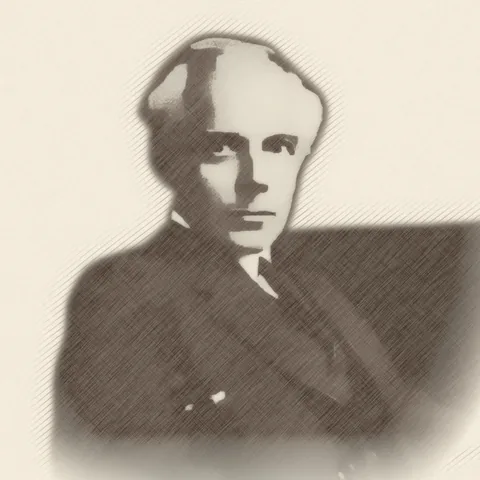 1881 – 1945Modernism
Béla Bartók
A researcher of folk music, he transformed rhythms and modes into a modern language.
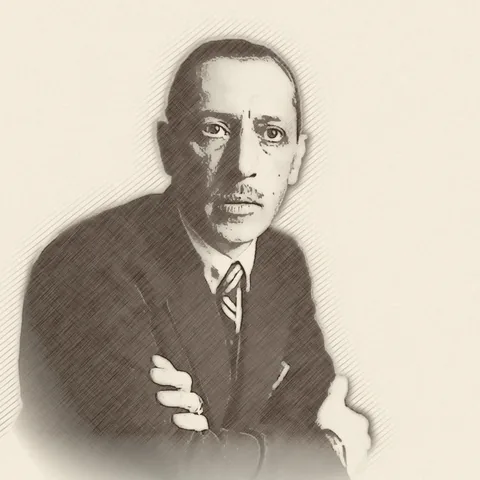 1882 – 1971Modernism
Igor Stravinsky
His rhythmic disruptions and stylistic reinventions shaped twentieth-century music.
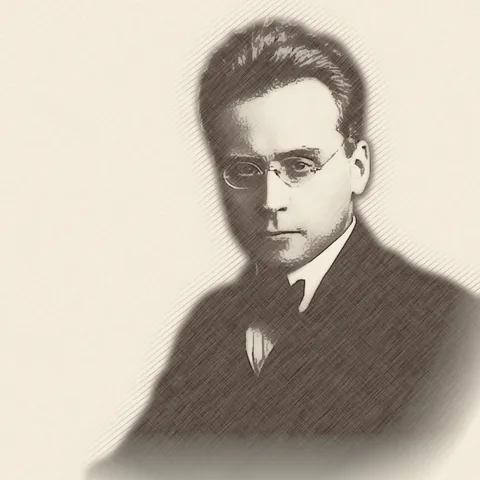 1883 – 1945Modernism
Anton Webern
An Austrian composer who distilled ideas into brief, precise forms.
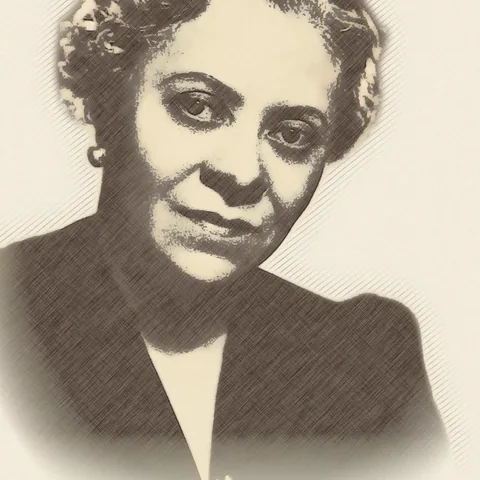 1887 – 1953Modernism
Florence Price
The first Black woman to have a symphony performed by a major US orchestra, she blended classical and African American traditions.
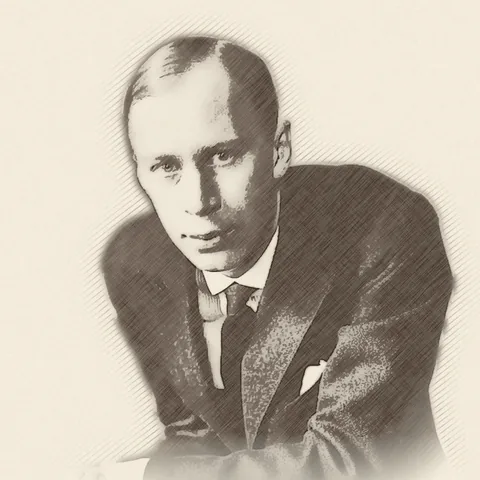 1891 – 1953Modernism
Serge Prokofiev
His angular melodies, sharp rhythms and theatrical flair appeal to all ages.
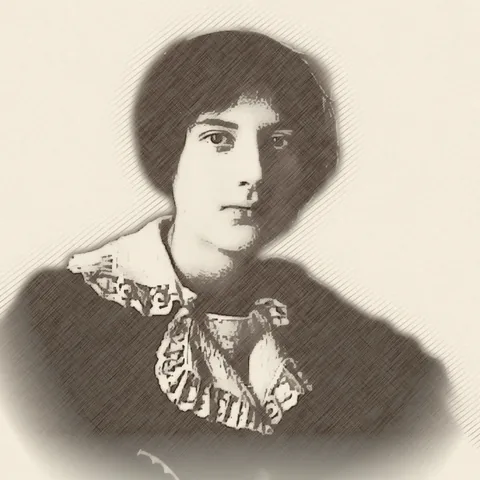 1893 – 1918Modernism
Lili Boulanger
The first woman to win the premier Grand Prix de Rome in composition, she left an intense body of work.