 Modernism
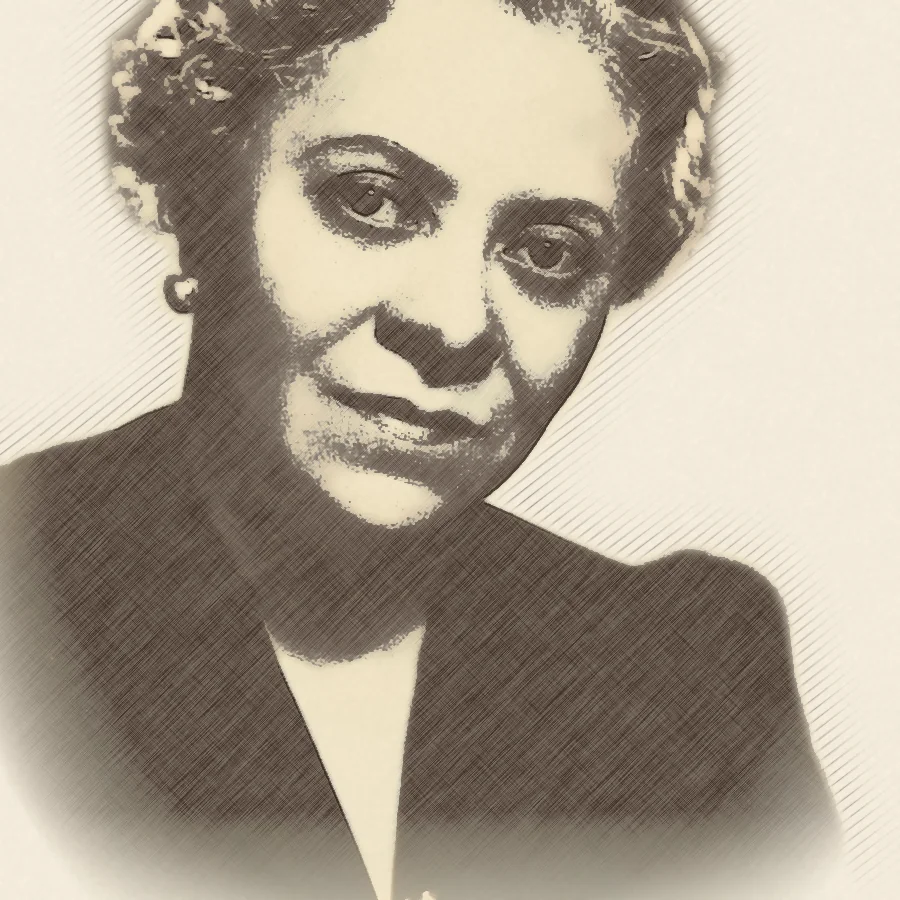
Florence Price
The first Black woman to have a symphony performed by a major US orchestra, she blended classical and African American traditions.
A life and its times
The milestones of the life and work, the contemporaries and the major world events, on a single line of time.
A life at a glance
And after his or her death: 1 landmark in the detailed timeline (2009).
- 1887Birth
Born in Little Rock on 9 April (Florence Beatrice Smith)
- 1889Meanwhile
The Eiffel Tower opens for the World’s Fair
- 1891Careerage 4
First piano performance at 4
- 1899Workage 12
Publishes her first composition at 11
- 1903Trainingage 16
Enters the New England Conservatory in Boston at 16
- 1903Meanwhile
First powered aeroplane flight (Wright brothers)
- 1906Trainingage 19
Graduates in organ and piano teaching
- 1910Careerage 23
Heads the music department at Clark University in Atlanta
- 1912Private lifeage 25
Marries the lawyer Thomas Price
- 1912Meanwhile
The Titanic sinks
- 1917Meanwhile
Russian Revolution
- 1922Meanwhile
Public radio broadcasting begins (BBC, Radio Tour Eiffel)
- 1927Milestoneage 40
Flees racist violence in Arkansas and moves to Chicago
- 1929Meanwhile
Wall Street Crash
- 1932Careerage 45
First prize in the Wanamaker competition for her Symphony No. 1
- 1933Workage 46
The Chicago Symphony Orchestra plays her Symphony No. 1 — a historic first
- 1934Workage 47
Piano Concerto in One Movement
- 1939Landmarkage 52
Marian Anderson sings her spiritual arrangement at the Lincoln Memorial
- 1940Workage 53
Symphony No. 3
- 1945Meanwhile
End of the Second World War; United Nations founded
- 1948Meanwhile
The long-playing record (LP) goes on sale
- 1953Deathage 66
Dies in Chicago on 3 June
- 2009Landmark56 years after death
Dozens of manuscripts are found in an abandoned house
Listen
Excerpts from freely licensed recordings, with their performers and licences.
Florence Price’s music is in the public domain, but Wikimedia Commons does not yet offer a freely licensed recording of these works. The links below lead to scores and searches on Commons; as soon as a free recording is published, it can be added here.
Listen to complete works on Wikimedia Commons
Wikimedia Commons is a free media library: you will find the complete recordings there, with their reuse conditions.
- Search for the workSymphony No. 1 in E minor
- Search for the workSymphony No. 3
- Search for the workPiano Concerto in One Movement
- Search for the workMy Soul’s Been Anchored in the Lord
- Search for the workPiano Sonata in E minor
- Search for the workSymphony No. 4
- Everything on CommonsAll recordings of Florence Price
The life of Florence Price
Florence Beatrice Smith was born on 9 April 1887 in Little Rock, Arkansas, in the United States, into a middle-class African American family. Her father, Thomas Smith, was a respected dentist, and her mother, Florence Gulliver, a schoolteacher and businesswoman, was also a good pianist and singer who gave her her first lessons. In the American South racial segregation was then enforced by law, but the Smith family moved in cultured circles: the pianist John Blind Boone and the educator Booker T. Washington were guests in their home.
A precocious child, Florence gave her first piano recital at four and published her first composition at eleven. She finished high school at fourteen, top of her class. In 1903, aged sixteen, she entered the New England Conservatory in Boston, one of the few conservatories that admitted Black students. To avoid discrimination, her mother advised her to present herself as Mexican. There she studied organ, piano and composition, notably with George Whitefield Chadwick, who encouraged her to draw on African American music.
In 1906 she graduated in organ and piano teaching. She returned to the South to teach, first in Little Rock and then in Atlanta, where from 1910 to 1912 she headed the music department of Clark University, a university for Black students. In 1912 she married the lawyer Thomas J. Price and returned to Little Rock. They had three children, including a son who died in infancy. She taught piano but, because of the colour of her skin, was refused membership of the state music teachers’ association.
In the 1920s racist violence increased in Arkansas. In 1927, after the lynching of a Black man in Little Rock, the Price family fled to Chicago, like hundreds of thousands of African Americans in the “Great Migration” to the North. In Chicago Florence Price studied composition and orchestration further at several institutions, published piano pieces and earned her living accompanying silent films on the organ and writing radio jingles. She divorced in 1931 and raised her two daughters alone in difficult conditions.
In 1932 she won first prize in the prestigious Wanamaker competition for her Symphony No. 1 in E minor, as well as another prize for her Piano Sonata. On 15 June 1933 the Chicago Symphony Orchestra under Frederick Stock performed her symphony at the “Century of Progress” World’s Fair: the first time a major American orchestra had played a symphony by a Black woman. The third movement is a “Juba Dance”, inspired by a dance of enslaved African Americans, with clapping hands and stamping feet.
Her music combines the European symphonic tradition, inherited from Dvořák and her teachers, with spirituals and African American dances and rhythms. In 1934 she premiered her own one-movement Piano Concerto. She composed more than three hundred works: four symphonies, two violin concertos, chamber music, organ pieces and many songs and spiritual arrangements. The great contralto Marian Anderson sang her songs and often closed her recitals with her arrangement of My Soul’s Been Anchored in the Lord.
In 1940 her Symphony No. 3 was successfully premiered in Detroit. But despite these successes Florence Price struggled to get her music performed because of prejudice against women and African Americans. She wrote to the conductor Serge Koussevitzky: “I have two handicaps — those of sex and race.” She died in Chicago on 3 June 1953, just as she was about to leave for Europe. Her music then fell into oblivion. In 2009 dozens of manuscripts, including her two violin concertos and her Fourth Symphony, were found in an abandoned house near Chicago, launching her rediscovery.
Works to know
- 1932
Symphony No. 1 in E minor
First symphony by an African-American woman played by a major orchestra.
Listen on Wikimedia Commons - 1932
Piano Sonata in E minor
Awarded alongside the symphony.
Listen on Wikimedia Commons - 1934
Piano Concerto in One Movement
A concerto she performed herself.
Listen on Wikimedia Commons - 1937
My Soul’s Been Anchored in the Lord
Spiritual arrangement sung by Marian Anderson.
Listen on Wikimedia Commons - 1940
Symphony No. 3
With a lively Juba dance.
Listen on Wikimedia Commons - 1945
Symphony No. 4
Rediscovered in 2009 and premiered in 2018.
Listen on Wikimedia Commons
Anecdotes
In 2009, dozens of her scores were found in an old abandoned house!
She also played the organ to accompany silent films.
In 1933 the Chicago orchestra played her Symphony No. 1: a first for an African American woman composer.
The singer Marian Anderson often ended her recitals with one of her spiritual arrangements.
Same era · Modernism
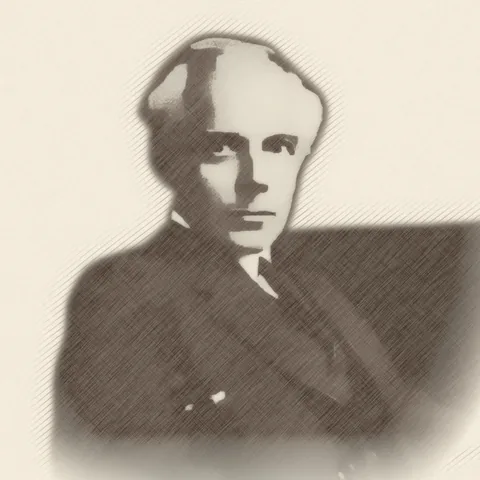 1881 – 1945Modernism
Béla Bartók
A researcher of folk music, he transformed rhythms and modes into a modern language.
 1882 – 1971Modernism
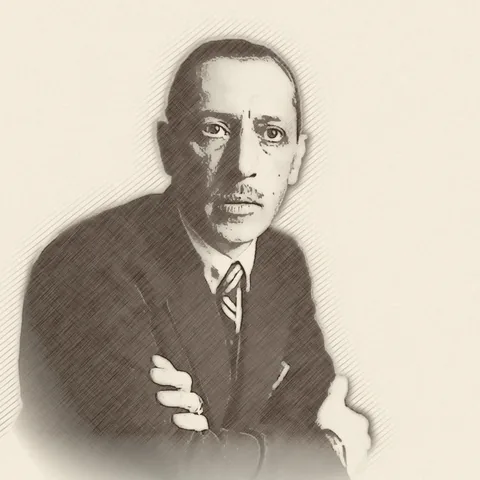
Igor Stravinsky
His rhythmic disruptions and stylistic reinventions shaped twentieth-century music.
 1883 – 1945Modernism
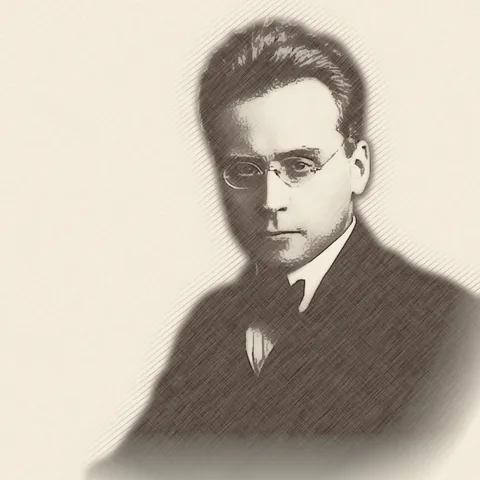
Anton Webern
An Austrian composer who distilled ideas into brief, precise forms.
 1885 – 1935Modernism
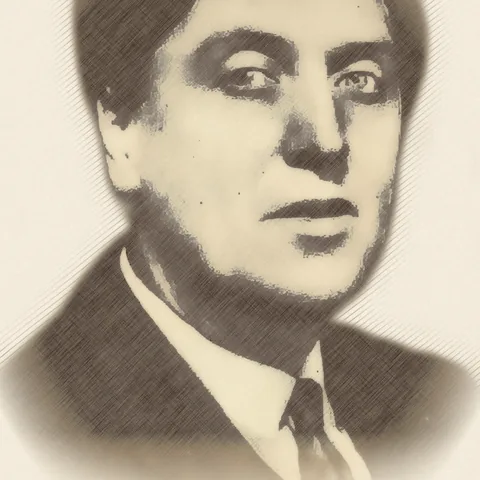
Alban Berg
A pupil of Schoenberg, he combined modern techniques with dramatic intensity.
 1891 – 1953Modernism
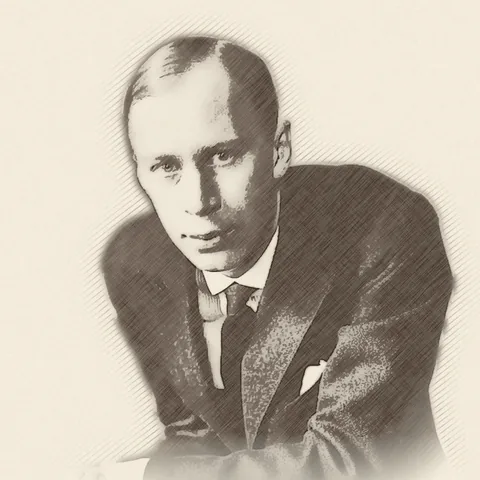
Serge Prokofiev
His angular melodies, sharp rhythms and theatrical flair appeal to all ages.
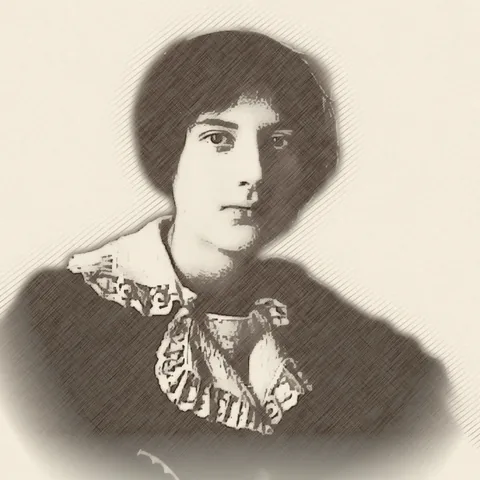 1893 – 1918Modernism
Lili Boulanger
The first woman to win the premier Grand Prix de Rome in composition, she left an intense body of work.